
NUMINA
September 5 — October 25, 2026
At Lander–Se, 585 Dunns Creek Road, Red Hill, Victoria 3937
Essay by Emma-Kate Wilson
The spirit of a place, object, moment, or action: numina represents an invisible force that doesn’t rule but inhabits. It’s something felt more than seen. At Lander–Se, Numina becomes a methodology for art to traverse through, as it leaves the spirit world and enters the physical world. For the three Mornington Peninsula artists, Hannah Nowlan, Charlotte Swiden, and Andrew Gibson, the concept means something different but allows them each a portal to express emotion, landscape, and the representation of the numina ghost.
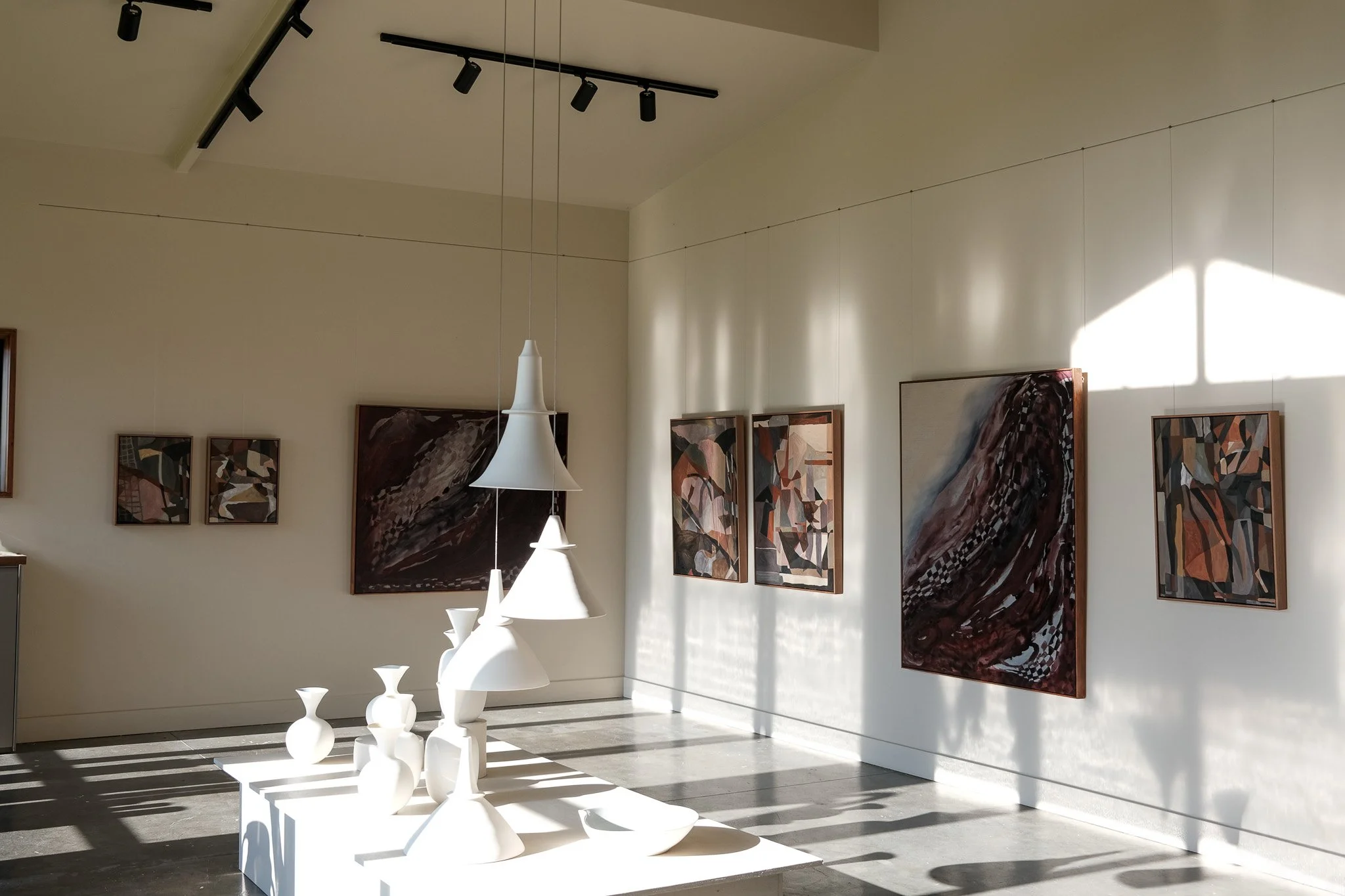
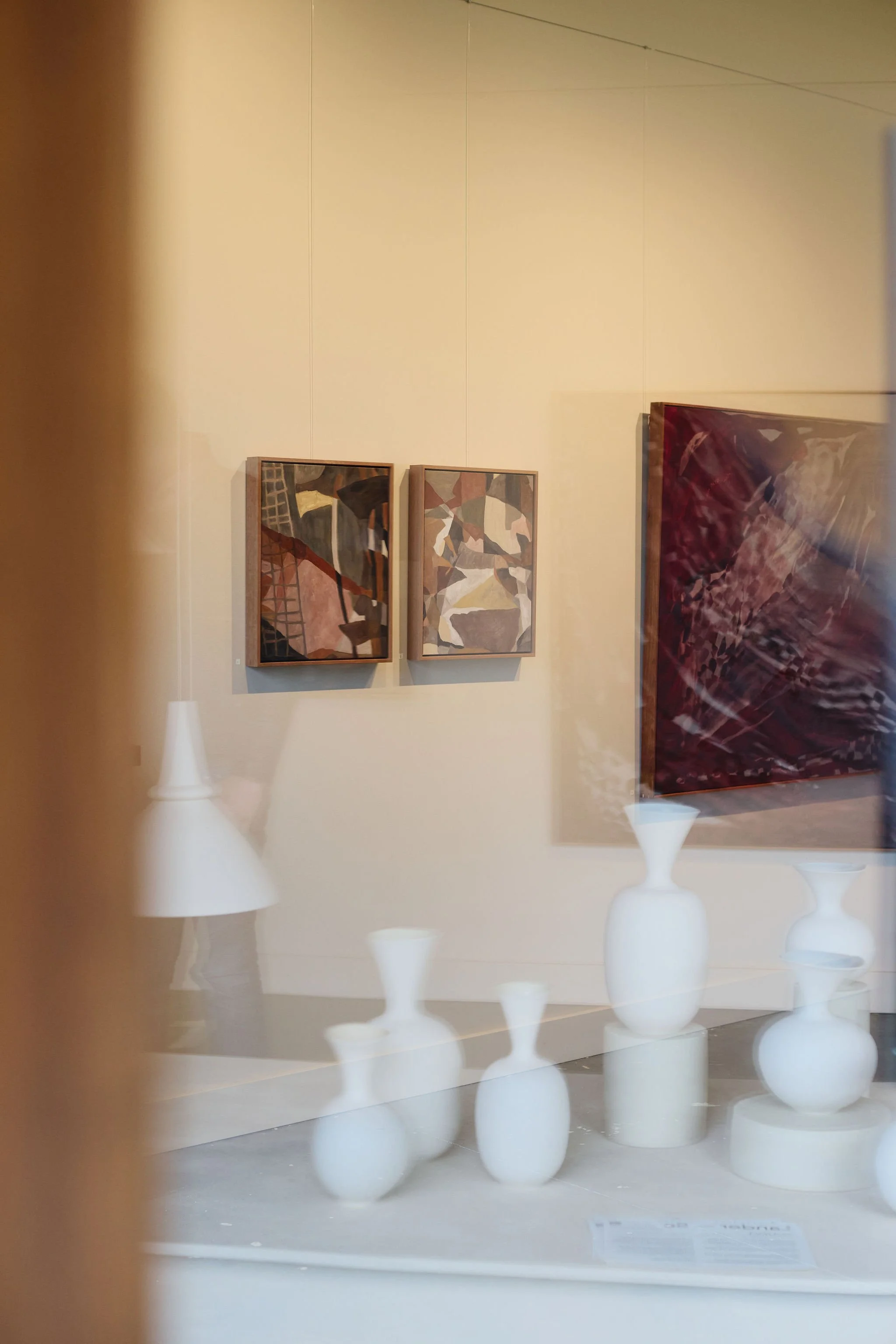
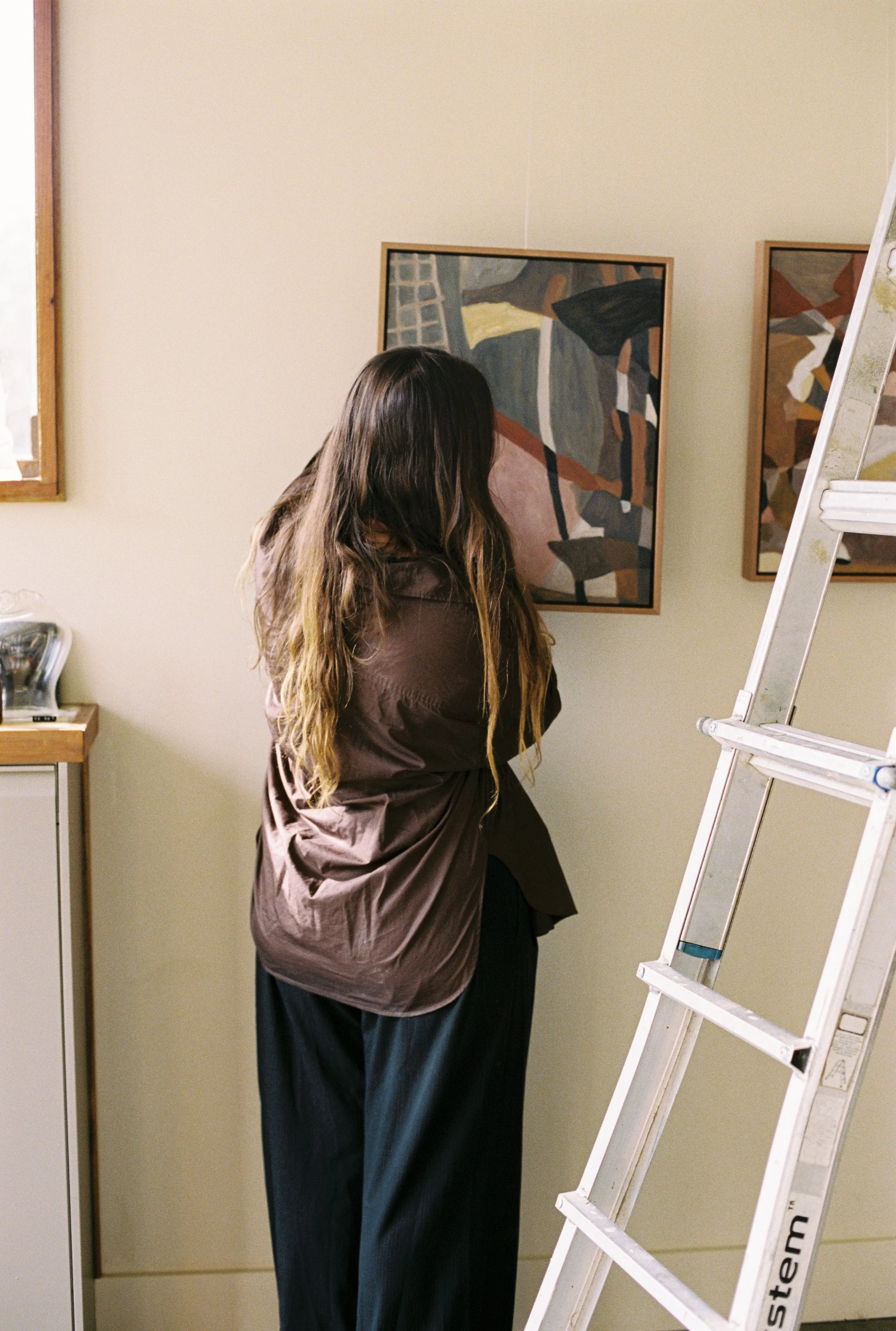
Swedish artist Charlotte Swiden uses her heritage, folklore and ritual to mediate the sense of living between two landscapes. She shares that these stories, told to children in Swedish, invite a sense that the landscape is alive; the rustling of trees, shifting light across water, or the stillness before rain allow for a curiosity and depth of understanding beyond what is known. Through nostalgia, symbols and familiar iconography, Swiden’s signature earthy, warm hues evoke home and yearning. In Swedish, the word ‘vemod’ conjures an expression for which there is no direct translation in English. But to try: “Vemod carries an underlying emotional ache: something familiar and beautiful that also feels distant, fleeting or just out of reach. A bittersweet, wistful melancholy born from longing, memory and the awareness of impermanence.” Here, nature carries a quiet charge as the numina travels into paintings that are deeply emotive and entwined with the senses. Childhood memories are a lens, and nature is a reconnection that depicts an internal landscape. Where home is the land and sea.
For the artist, her artworks are a subconscious translation of the environments that shape her. A flow follows, a dance in and out, energetic charges of paint, collections of memories, dreams, and thoughts. For Numina, Swiden returns to oil paint for a full-circle moment, a sense of freedom and experimentation that comes with new challenges. Finding belonging anchored in her two cultures as the colder months move into the burst of warm weather. How the cold can bring memories of a first home, and the sun brings a reminder of why she moved.
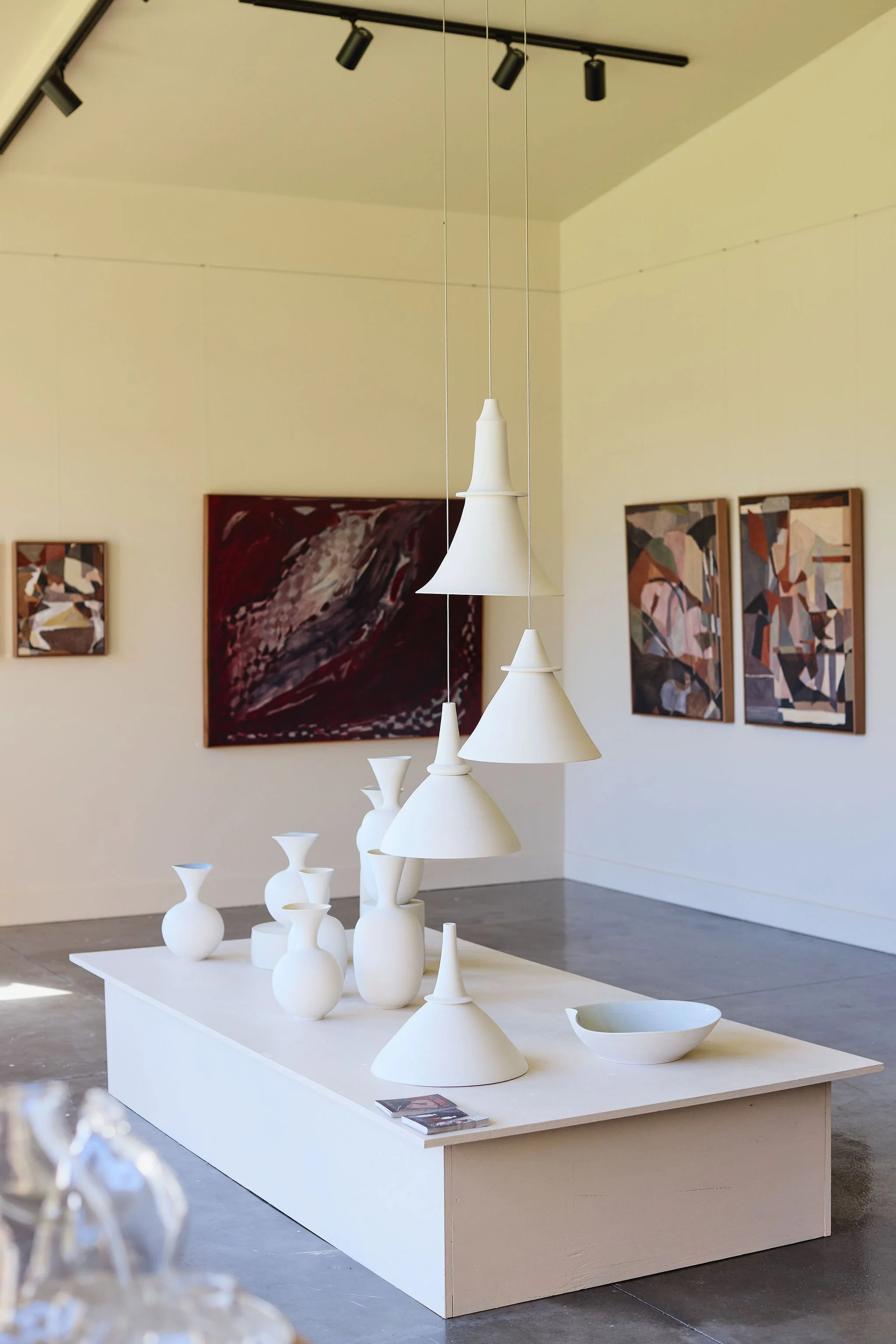
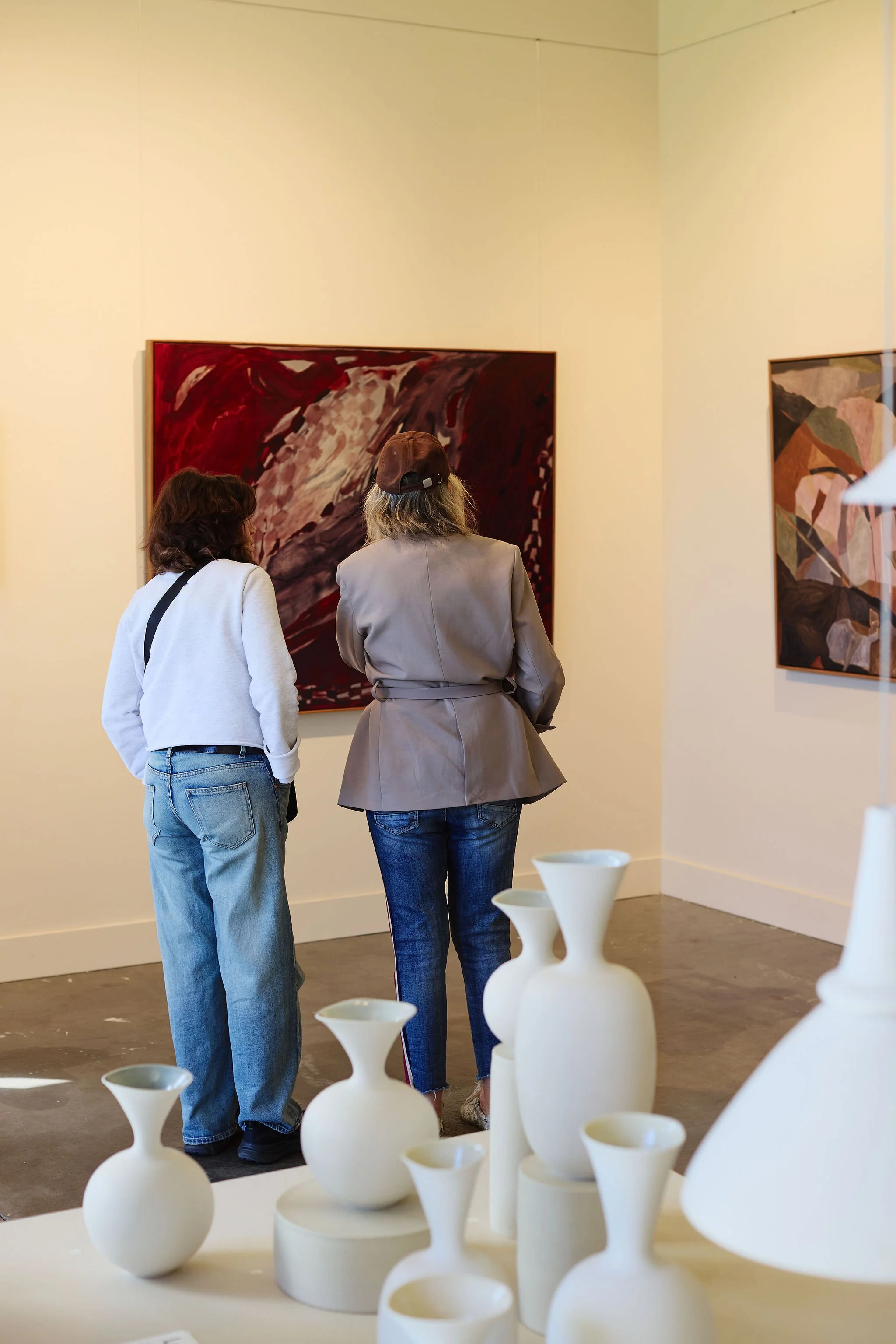
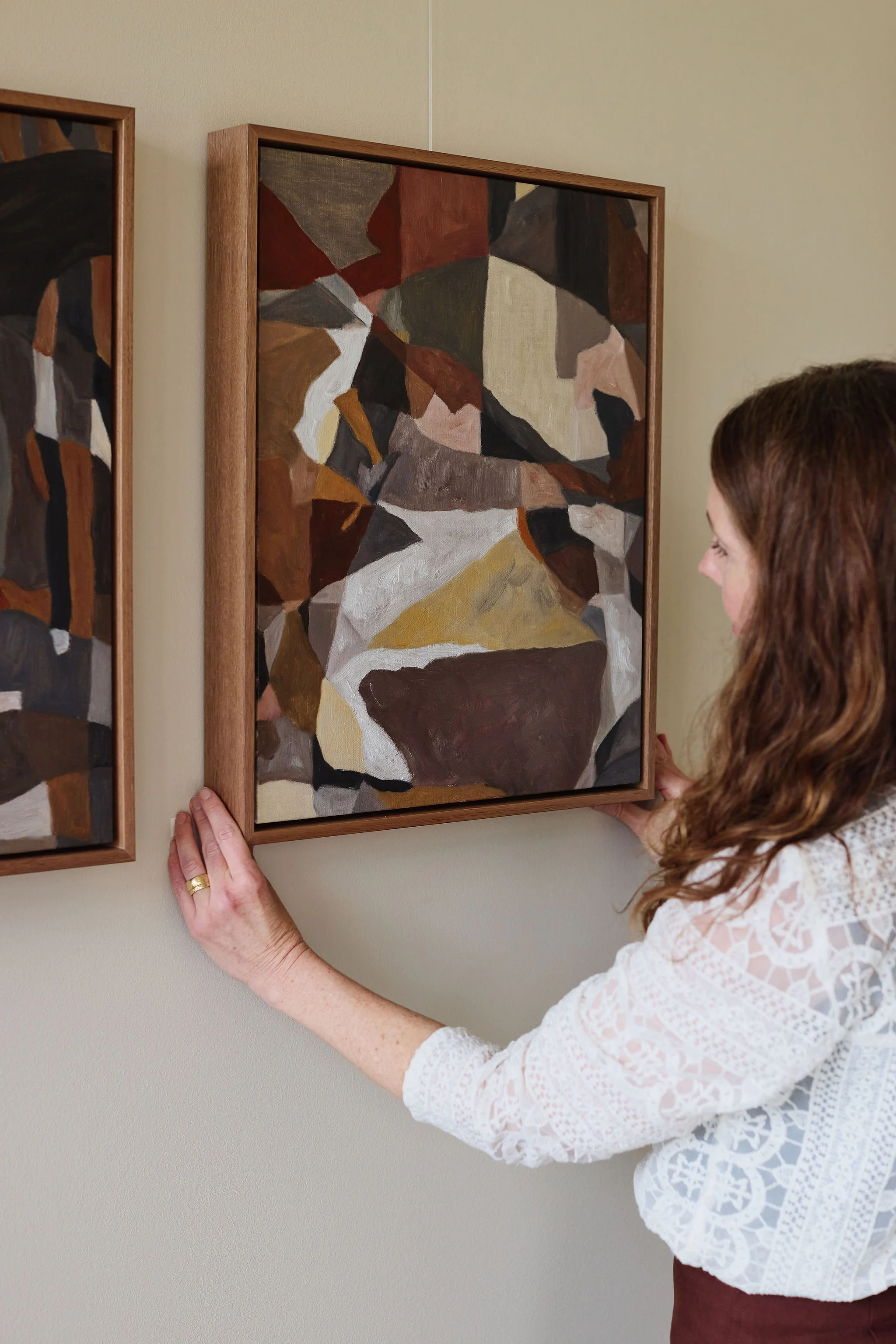
In Hannah Nowlan’s oeuvre, she depicts the landscape within, and for Numina, she becomes vulnerable as she exposes the haunting spirit of an invisible illness and the impacts of a sensory ghost that leaves tracks in her nervous system. Her sweeping, gestural abstract paintings came from a place of internal battles through the winter, where she found herself having to retreat and enter an inner world of recovery and rest. The depths of the brushstrokes expose the ‘somatic territories of the spirit’, something she describes as deep bodily sensations that map spiritual geographies. The human body is a canvas, mapping spiritual, ancestral, and psychological experiences.
Within each painting, iconography evokes nature, the landscape, and the weather — the winds that move the energies of numina. Like the charged feeling in the air before a storm, or the warmth that comes with spring, shaking off the crispness of winter on the Australian coast. Nowlan is drawn to a moody, bodily colour palette, one that captures a sensory, ghostly quality through layers of transparent paint. This methodology narrates the shape of self. Finding meaning in the human experience. For her, they allow for a cracking open of a shell she creates, the armour to protect her interior space; a state of pressure comes through the energy of the paintings. A space to delve deep into the somatic state, a creative space of listening to the body.
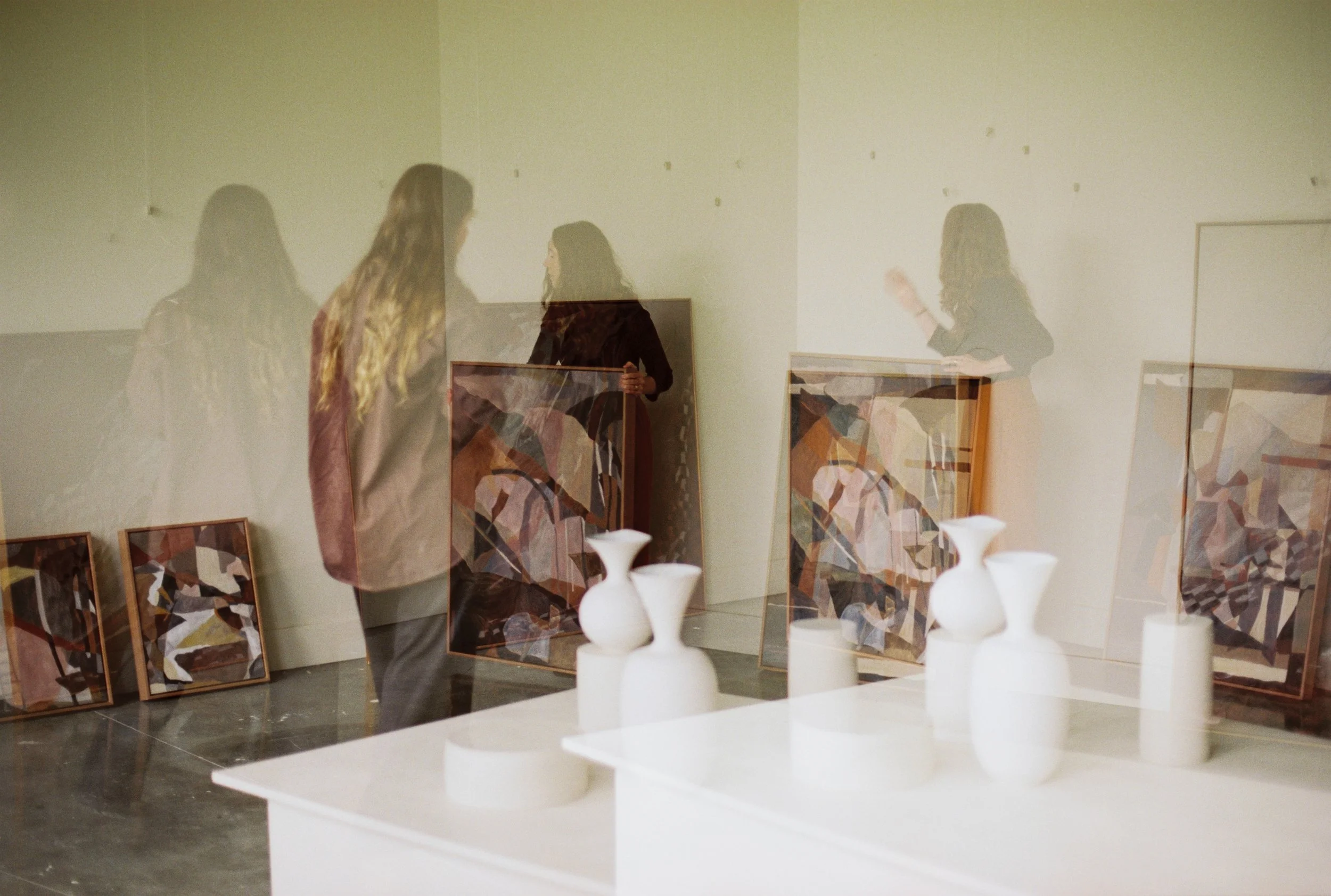
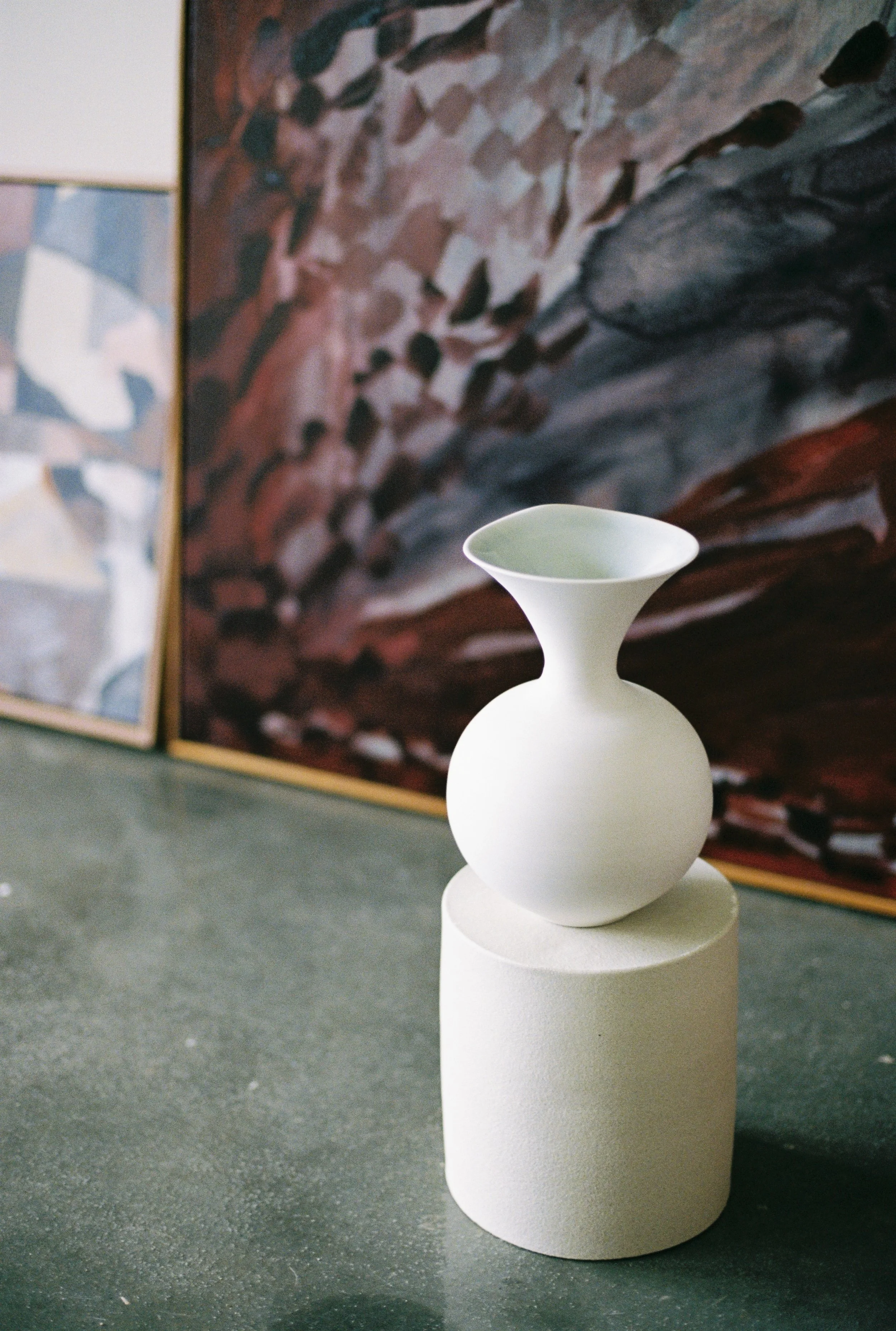
Andrew Gibson’s artworks visually offer a counterpoint to burgundy, pinks and browns in Swiden and Nowlan’s large-scale paintings. Instead, the ghostly figure of numina is represented in pure, white, flawless porcelain forms. They become the juxtaposition of light and shadow, casting impressions through the gallery as the afternoon sun brightens the space. But the sculptures, captured in elongated vessel forms, make the rays become their own. The effect allows the silhouette to become a homage to the material, as they sit quietly entwined with the surroundings. A ghostly figure representing an in-between state — the solidness of the object, to the fragile nature of the material.
The process of making is holistically embedded in the environment, a cold, wet winter leads to longer drying times. There is life in the method that generates soul; the numina of pressure. Firing further changes the shape as the vessels become memory of the process and method. Gibson shares that this exhibition is his first since the early 2000s after years of a studio ceramic practice. After a long winter and a long artistic anticipation, the sculptures for Numina are entangled with life and seasons. Of the ever-changing weather outside his studio in Westernport Bay. The high-energy storms that roll past his window and bring with them the numina that imprint the porcelain with their trace. Alongside the porcelain, Gibson has experimented with black clay and the neriage technique, where coloured clays arestacked and thrown on a potter's wheel, allowing the tones to merge into a marbling effect.
They offer a blend of states — of the white porcelain and black clay. Decay and growth. Each of the artists allows numina to flow through their practice for artworks that stem from pressure, a slowing of process that comes after winter. Numina, the exhibition, invites essential cues to take notice of this quiet shift of energy. Entwining the physical with the spiritual for something so deeply grounded in the landscape.