
TRACE: Exhibition
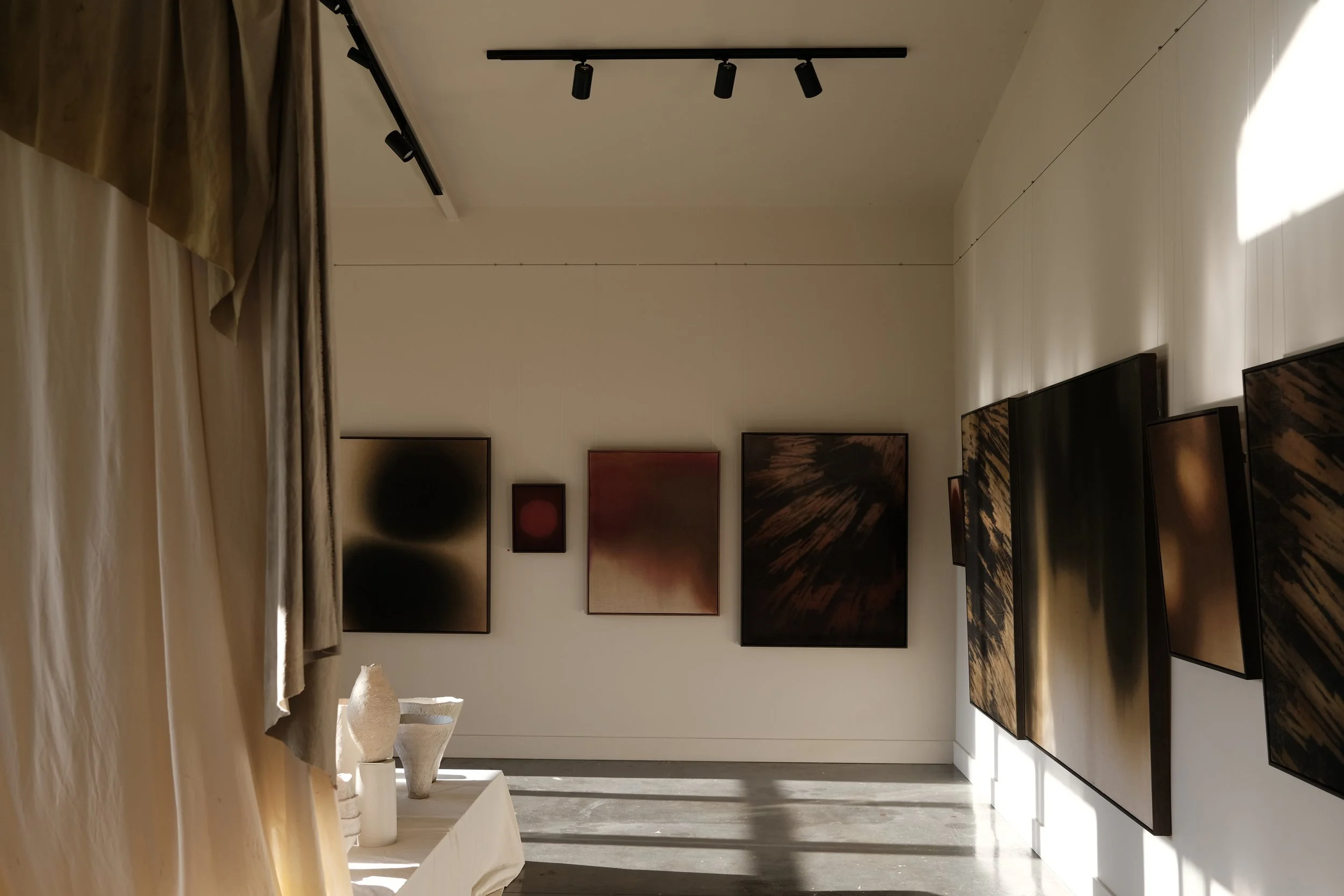
There is a particular kind of attention TRACE asks of you. Not the quick scan of a gallery visit, but something slower. The kind that comes when you stand still long enough for a surface to open up.
Lander—Se presented TRACE across six weeks in autumn, bringing together Melbourne painter Ksenia Shinkarenko and Mornington Peninsula ceramicist Natalie Cootes. The two practices are distinct in medium but speak a shared language: both work with natural materials, both allow process to determine the outcome, and both produce surfaces that carry the visible evidence of how they were made. Plant matter pressed into cloth. Minerals worked into clay. Time, light, and the hand of the maker left legible in the finished form.
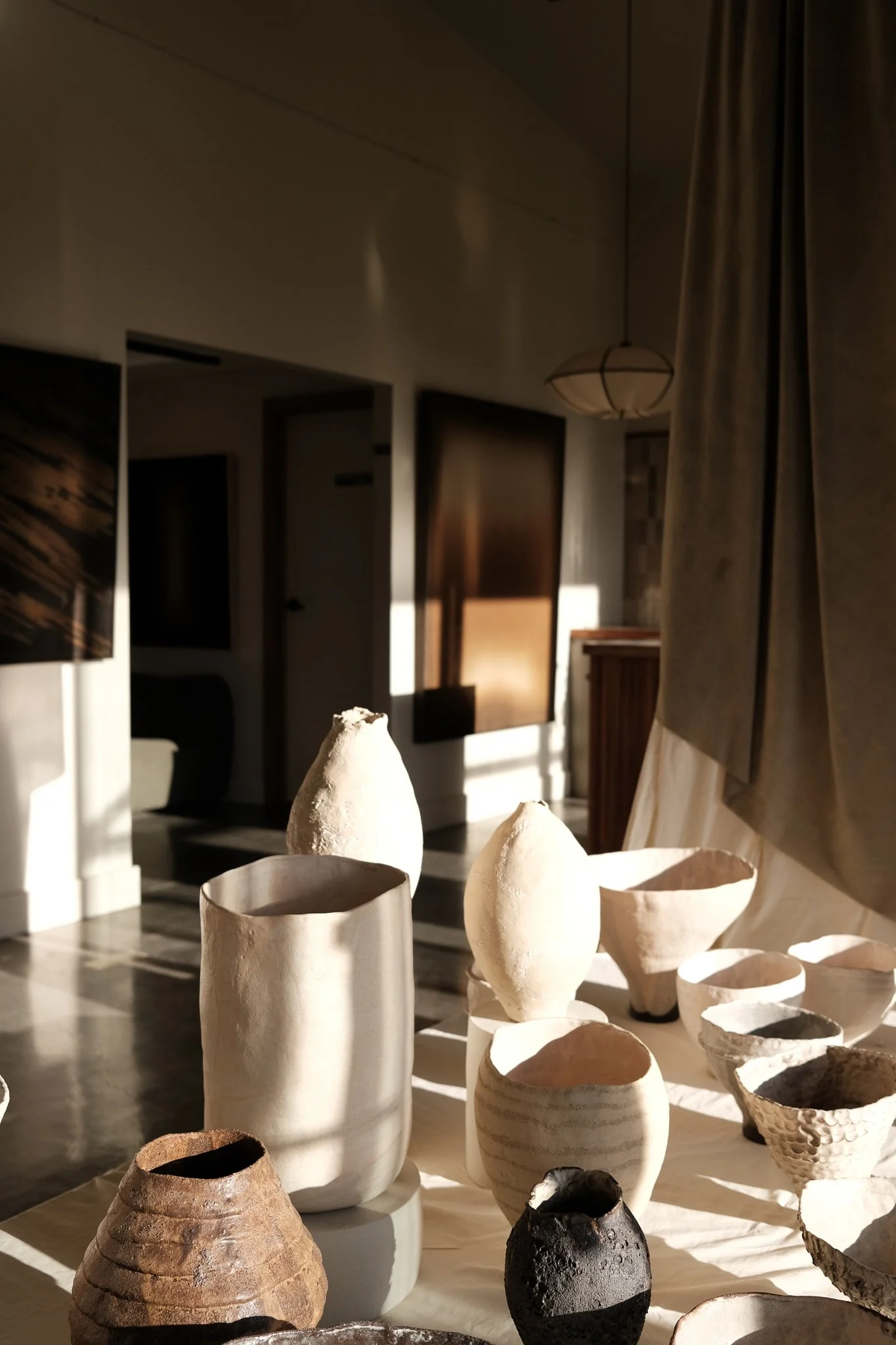
The exhibition centred on a large textile installation by Shinkarenko that draped through the gallery from ceiling to floor, pooling across the ground and forming what became, in effect, an interior landscape. Cootes’ ceramic vessels were arranged along a long central plinth beneath and within it — a spatial dialogue between painting and vessel, cloth and clay, softness and weight. The naturally dyed fabric shifted with the light throughout the day, catching it differently at each hour, casting gradients of warmth across the space and across the works below.
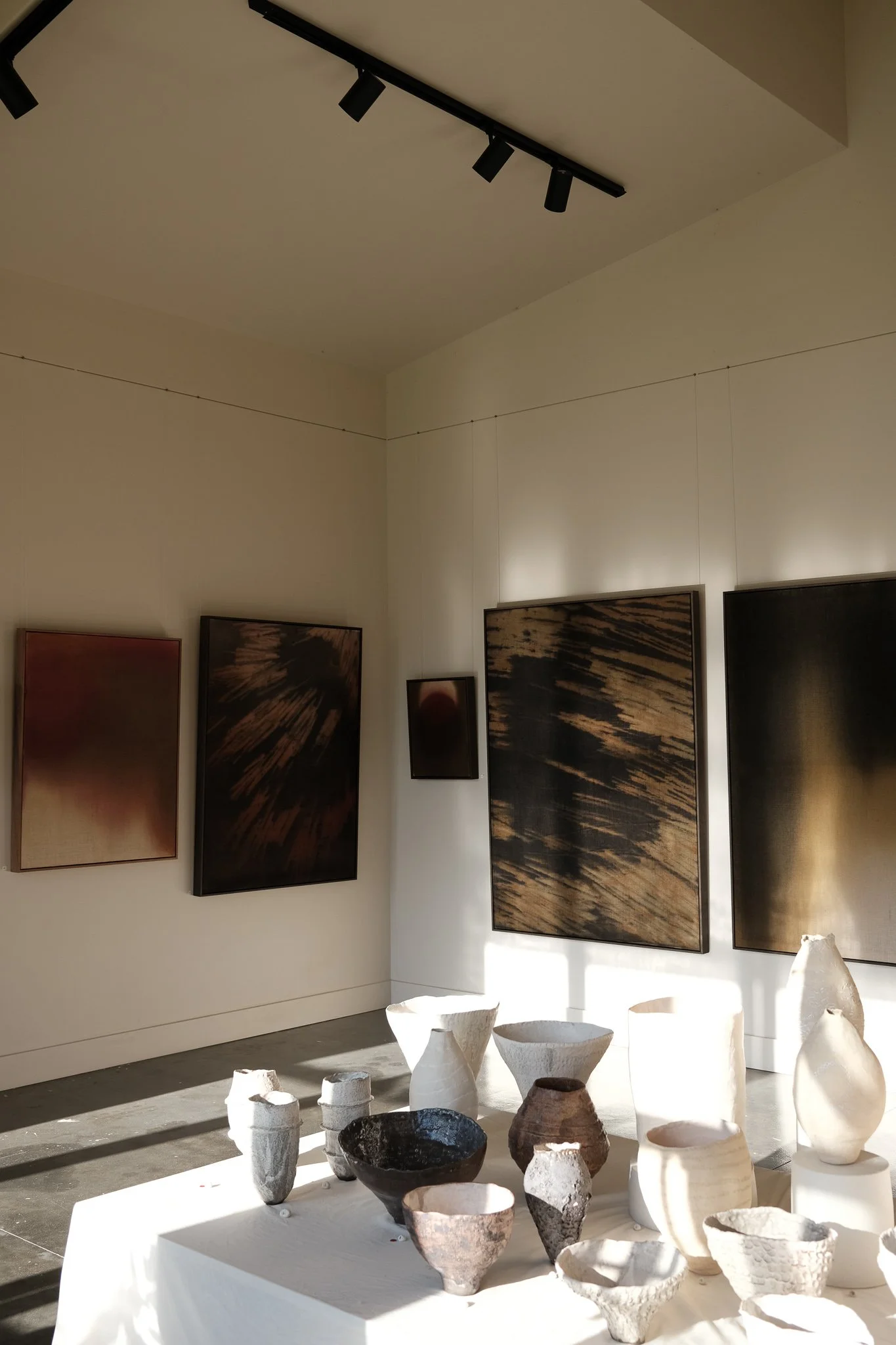
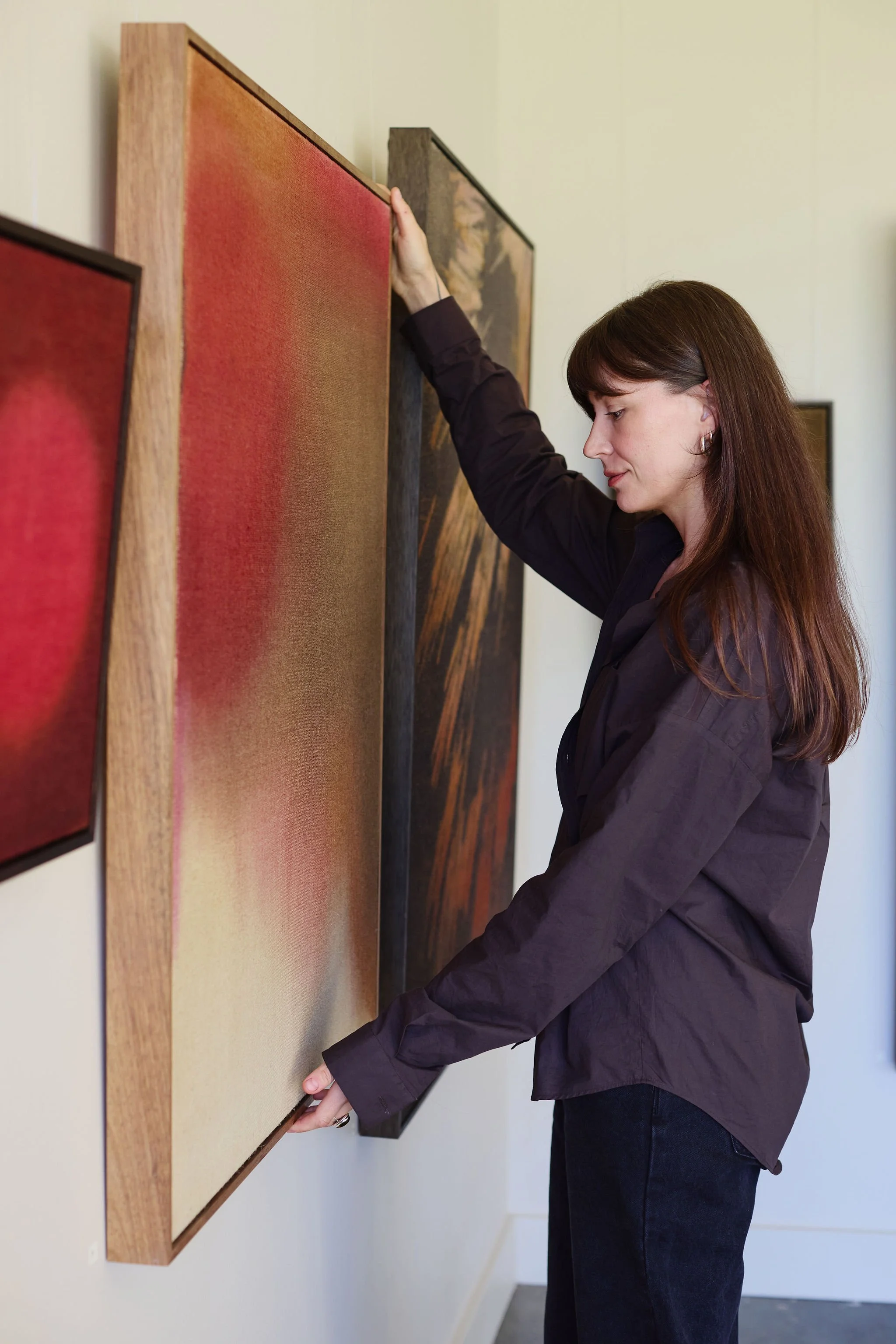
Shinkarenko works with walnut, weld, madder and mulberry on fabric prepared through a traditional soy milk bath. In some works she applies dye directly using large Japanese brushes, building tonal fields through layering and absorption. In others, leaves and botanical matter are placed directly onto the surface before the cloth is bundled and steamed, plant matter transferring its marks through heat and time. Both approaches surrender the final outcome to material behaviour. The colour migrates into fibre beyond full direction. What arrives is not entirely planned and not entirely accidental — it is the result of conditions carefully prepared and then released.
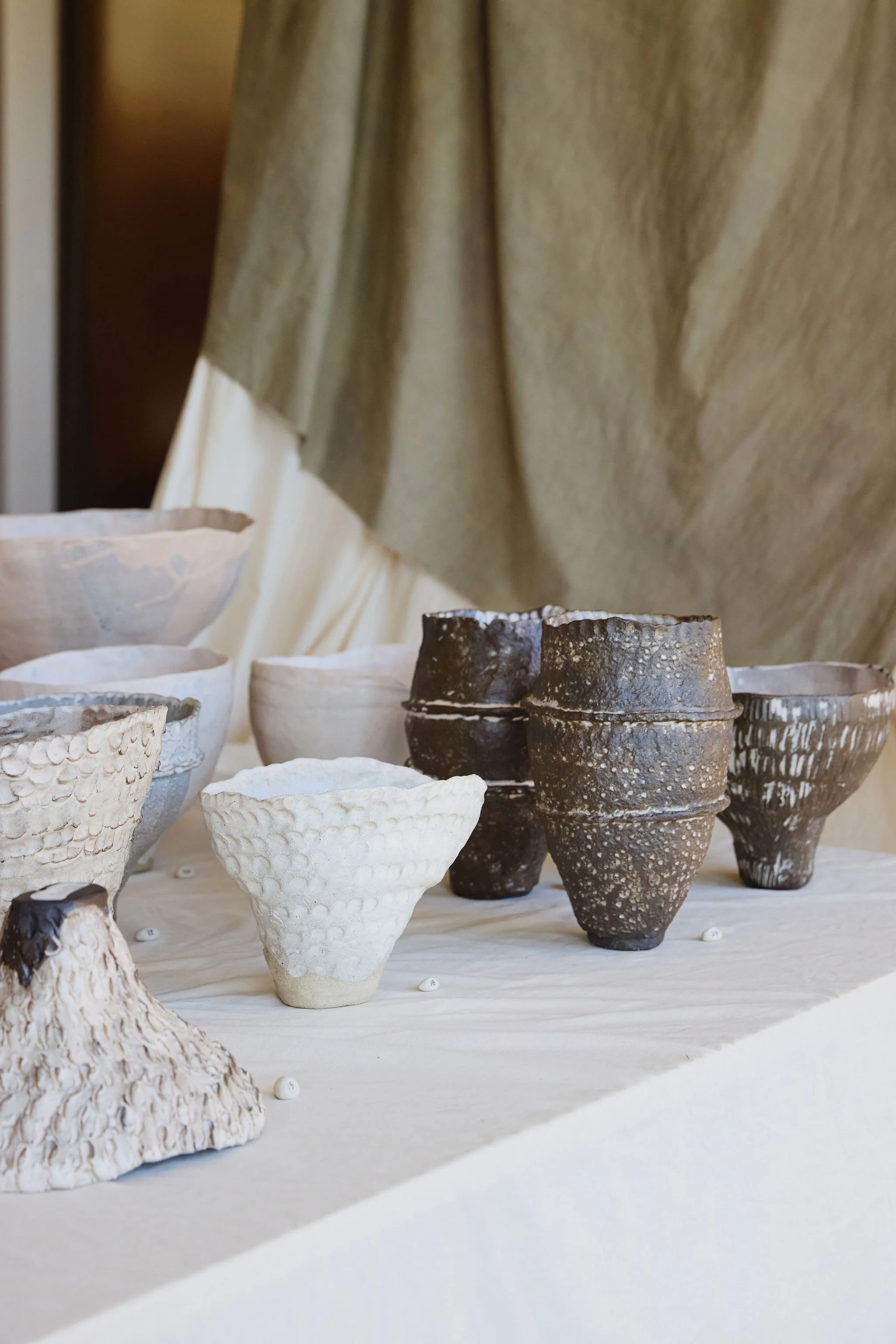
Cootes works by hand, building each vessel through coiling and pinching, embedding natural materials — sand, salt, crushed rock, seed pods, shells, coral, volcanic fragments gathered from travels through Greece, Japan, Iceland — directly into the surface. Glazes are layered and fired multiple times, producing mineral variation that recalls weathered stone and oceanic formations. Each vessel carries the imprint of its making and of the places that shaped its maker. The titles name the objects whose traces remain in the clay: fig, acorn, cone shell, sycamore.
Together the works considered what a surface can hold. Not as narrative, but as physical record. Evidence of duration, pressure, seasonal change, and accumulated gesture. TRACE proposed that making is itself a form of memory — that the process of a work, the life it had before you encountered it, is as present as the finished object.
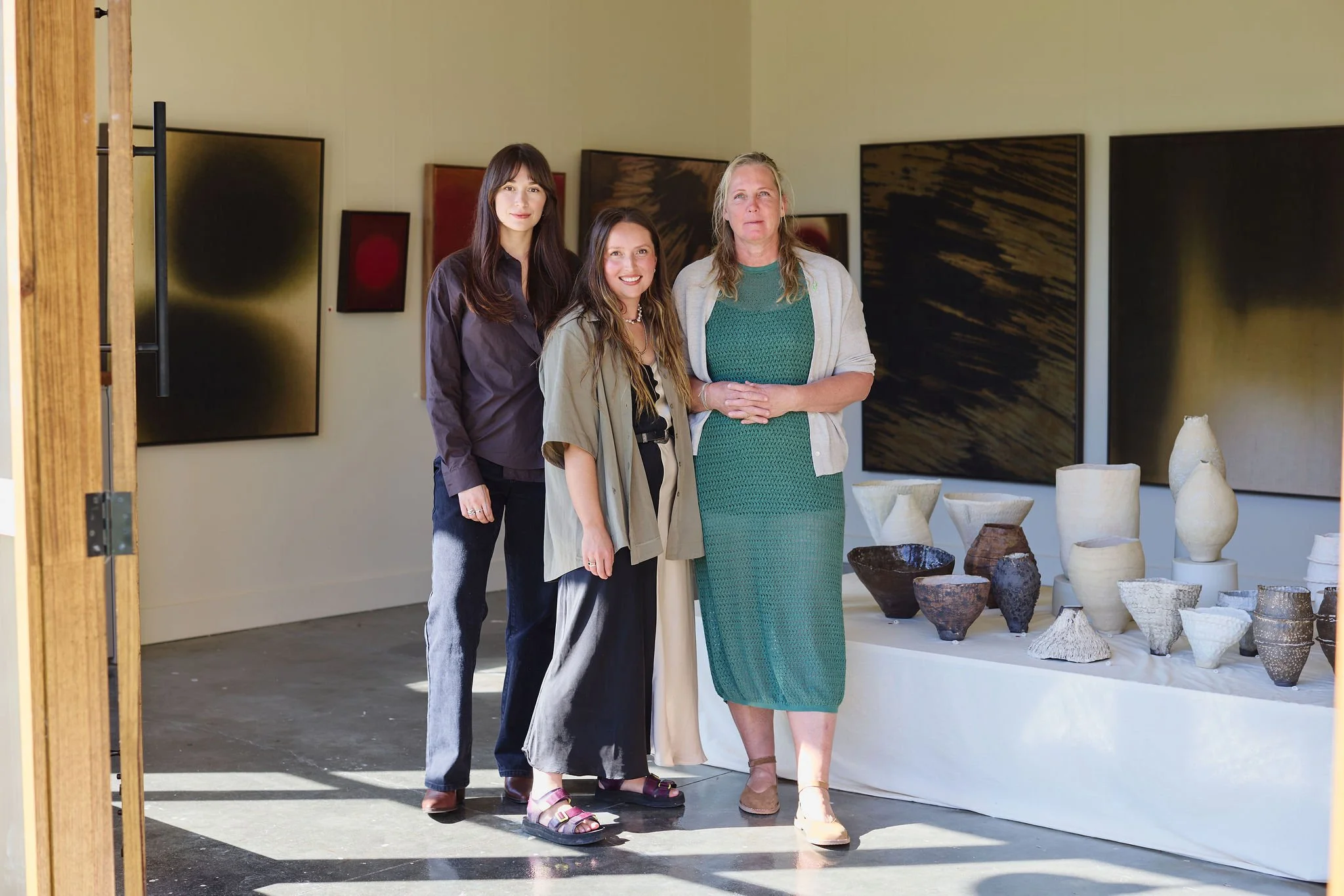
Both artists carry daily rituals into their practice. Cootes swims in the ocean each morning, collecting objects along the way, observing the reef and rock formations near her home in Somers. Shinkarenko begins each day outdoors, sitting in the sun before starting work, carrying a camera wherever she travels to gather images of light and texture that gradually find their way into the paintings. These rituals — unhurried, attentive, rooted in physical place — are legible in the work itself. TRACE rewarded the same quality of attention it took to make it.
The exhibition also marked Lander—Se’s first evening event: TRACE: Remnants, a dinner with the artists held within the installation on May 23. Catered by Common Table with wine by Kerri Greens, the evening gathered a small group around a shared table inside the draped textile environment, the vessels close at hand. A publication accompanied the show, with an original essay by Emma-Kate Wilson. Read about the evening and the publication in their own entries in this journal.
Selected works from TRACE remain available through the Lander—Se Stockroom. Contact art@landerse.au to enquire.
TRACE — Ksenia Shinkarenko + Natalie Cootes
April 25 – May 31, 2026
Lander—Se, 585 Dunns Creek Road, Red Hill