TRACE: Publication
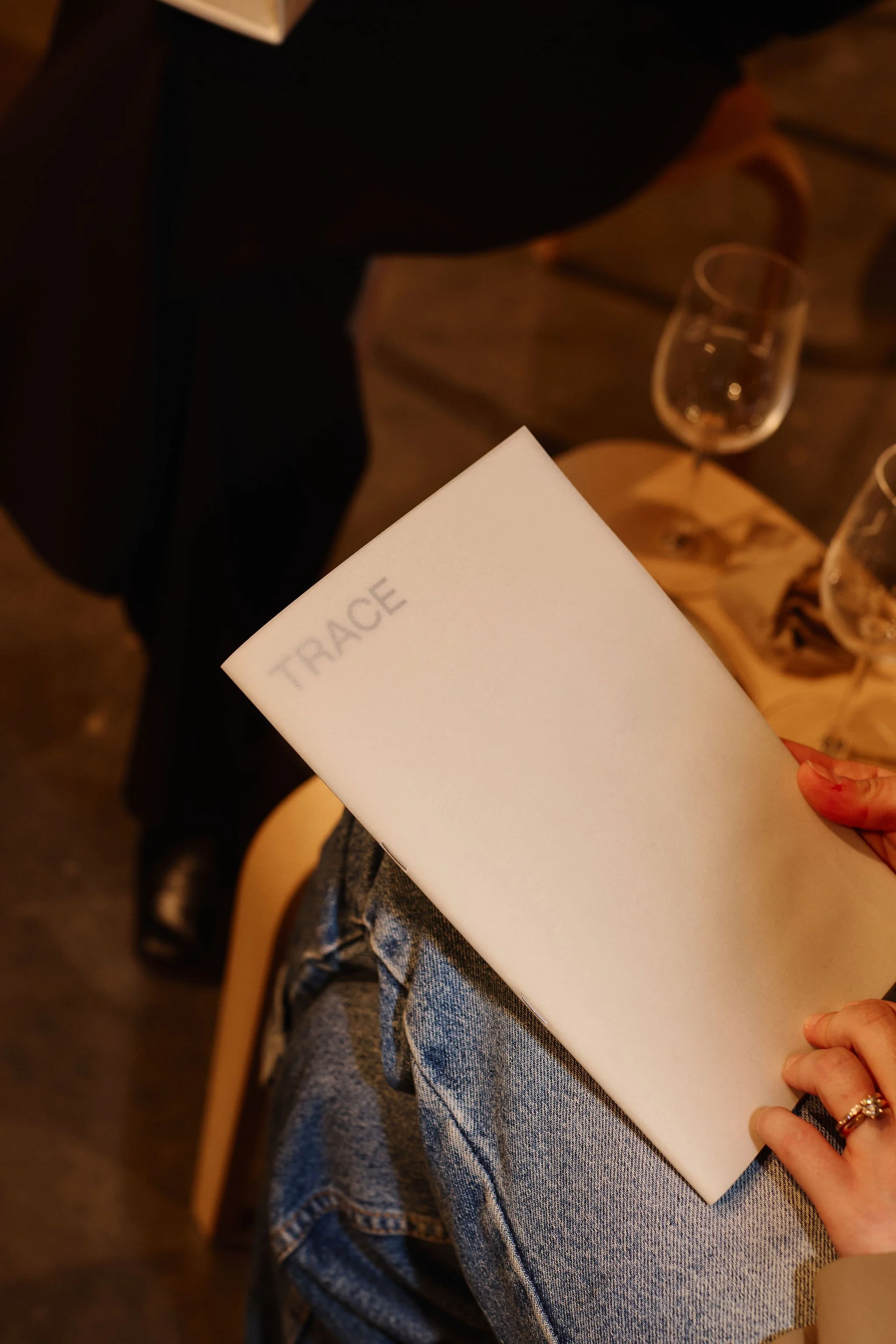
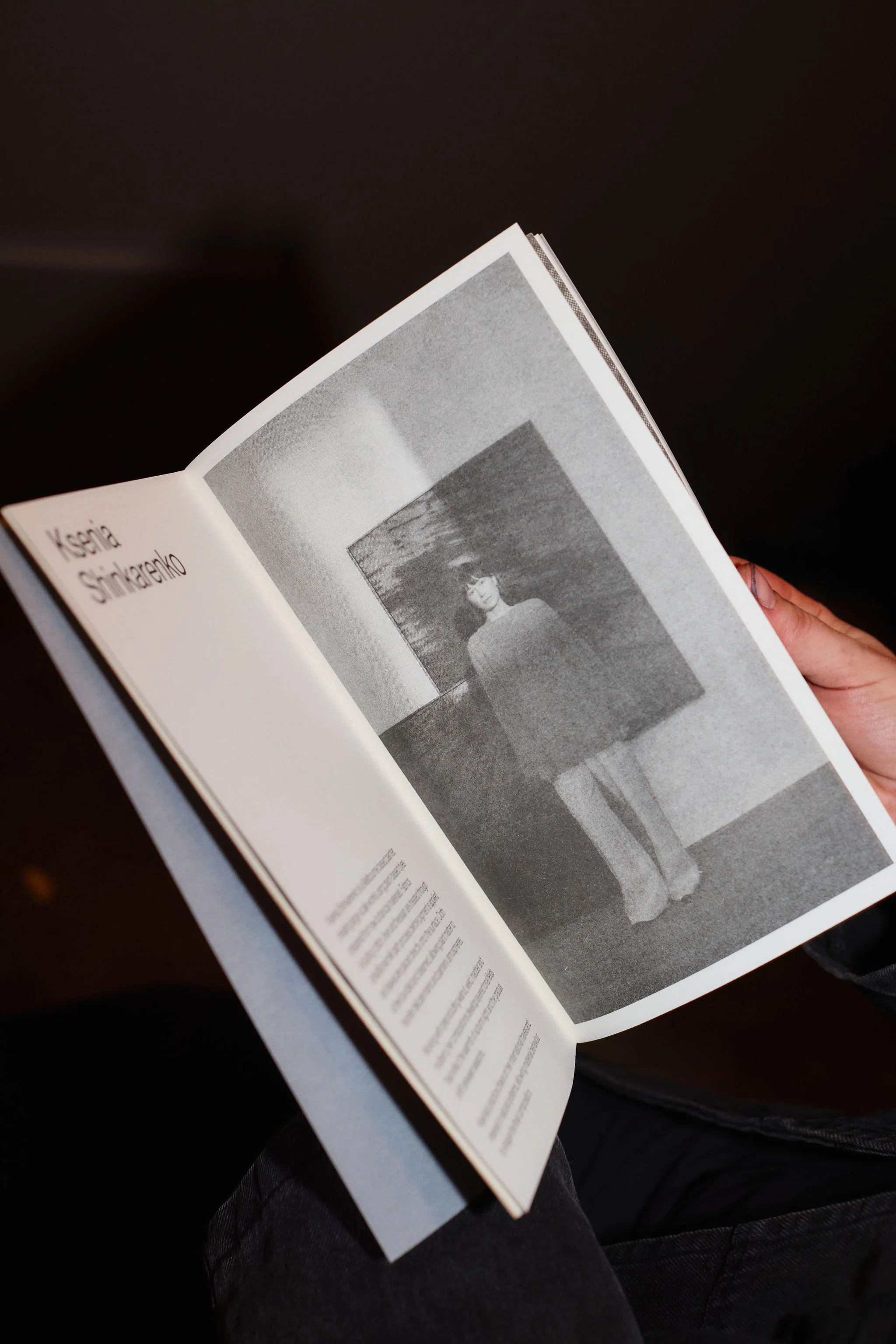
TRACE is accompanied by an original essay by arts writer and critic Emma-Kate Wilson — a voice whose work I have long admired and am looking forward to continuing to work with creatively. Commissioned to explore the exhibition's artists, their studio rituals, and the material surfaces their practices produce, the essay was published as a limited edition of fifty. The first twenty-five copies accompanied the show. The final twenty-five are available to enquire about now.
Photography by Bri Horne, Michaela Barca and Nick Chen. Design by Dimitar Mitkov and Matthew Peter Karak.
To enquire, contact art@landerse.au
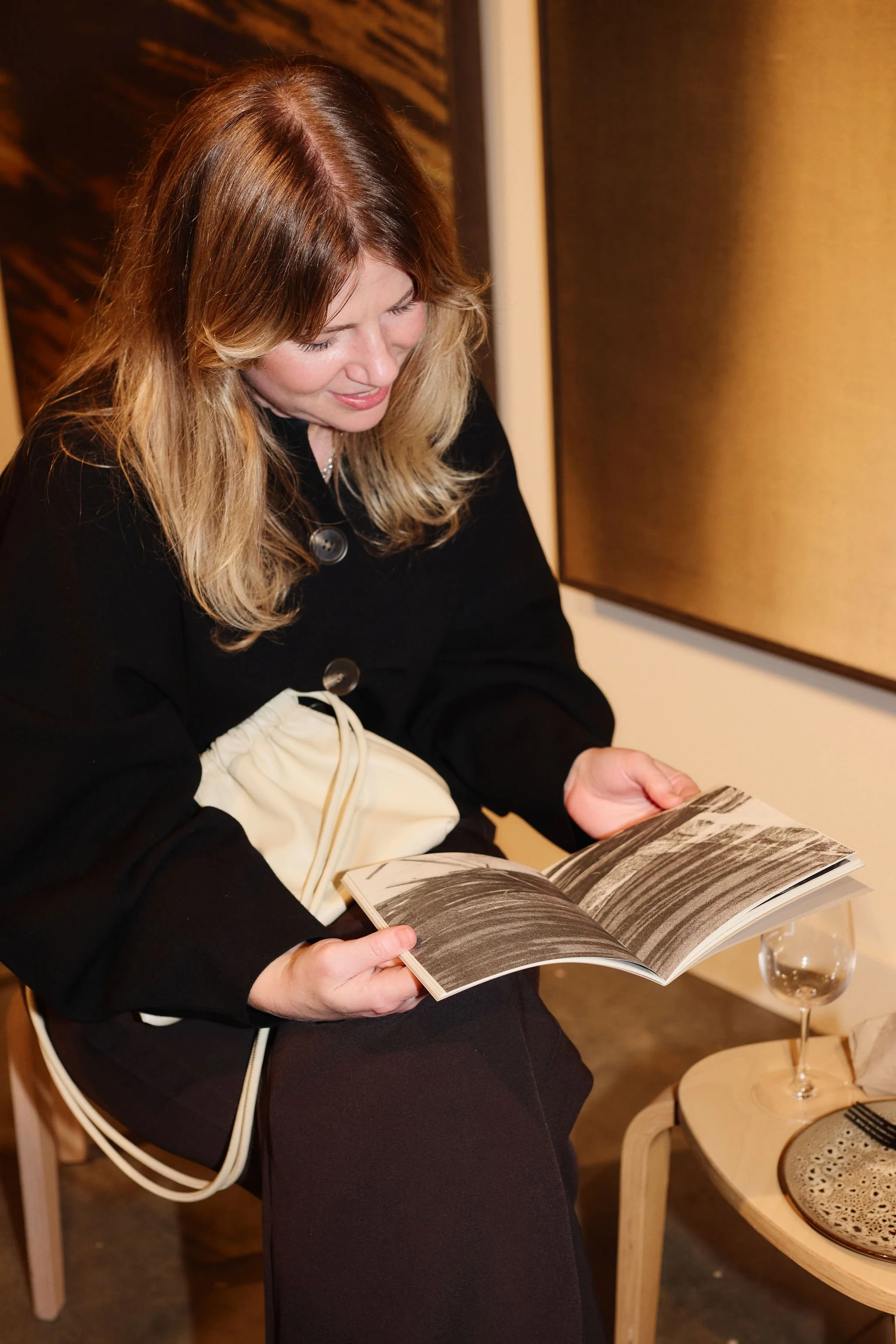
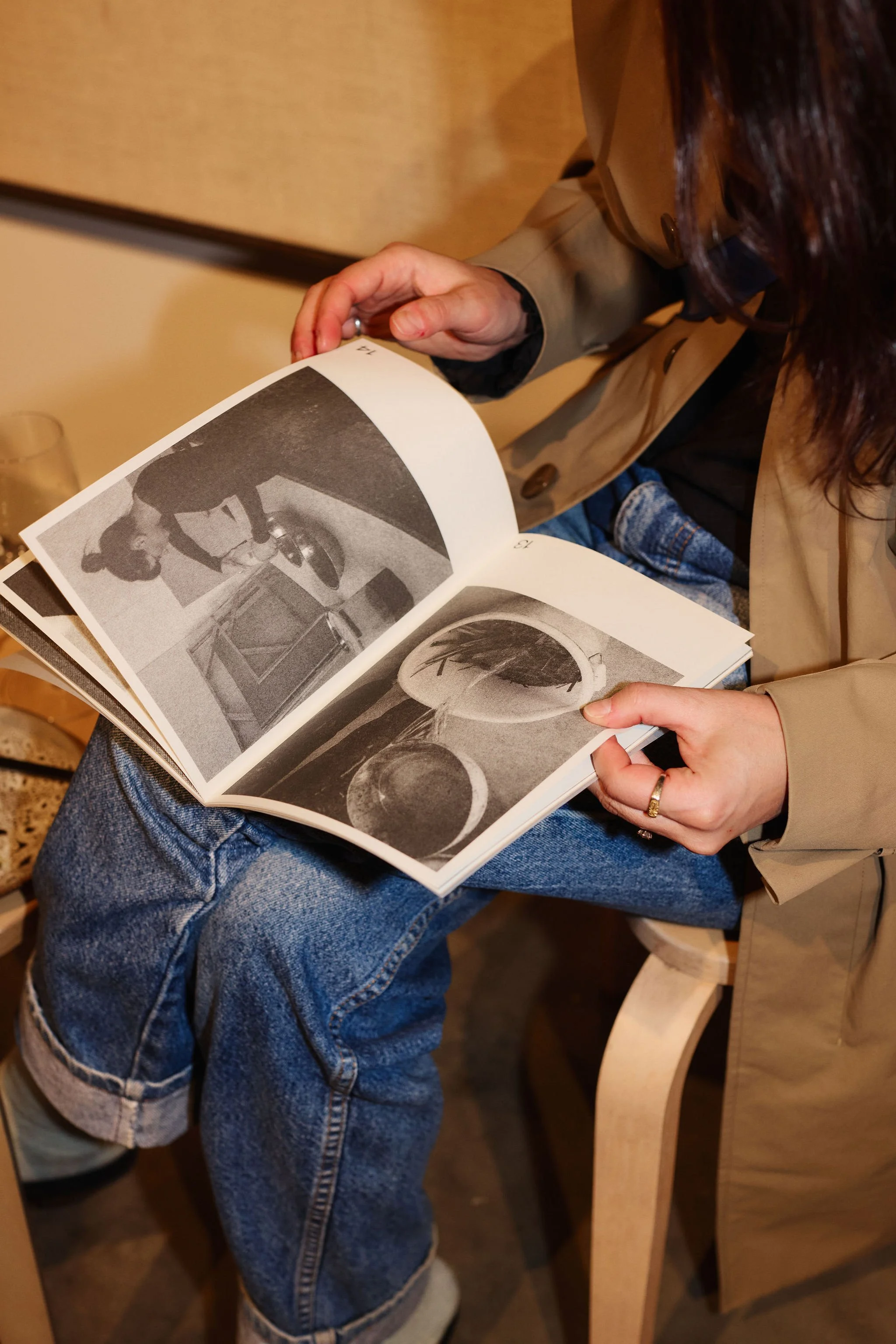
Exhibition essay by Emma-Kate Wilson
In a gallery designed to dissolve the parameters of landscape artworks, created on or near the Mornington Peninsula, TRACE represents fleeting moments while musing on the changing Autumn season. A shifting experience holding trace of process and memory. From remnants, fossils, to ephemeral glimmers of light, the artworks are an experimentation of glaze and natural dyes. TRACE at Lander—Se invites material memory. The process of the artwork, the life it had before you saw it.
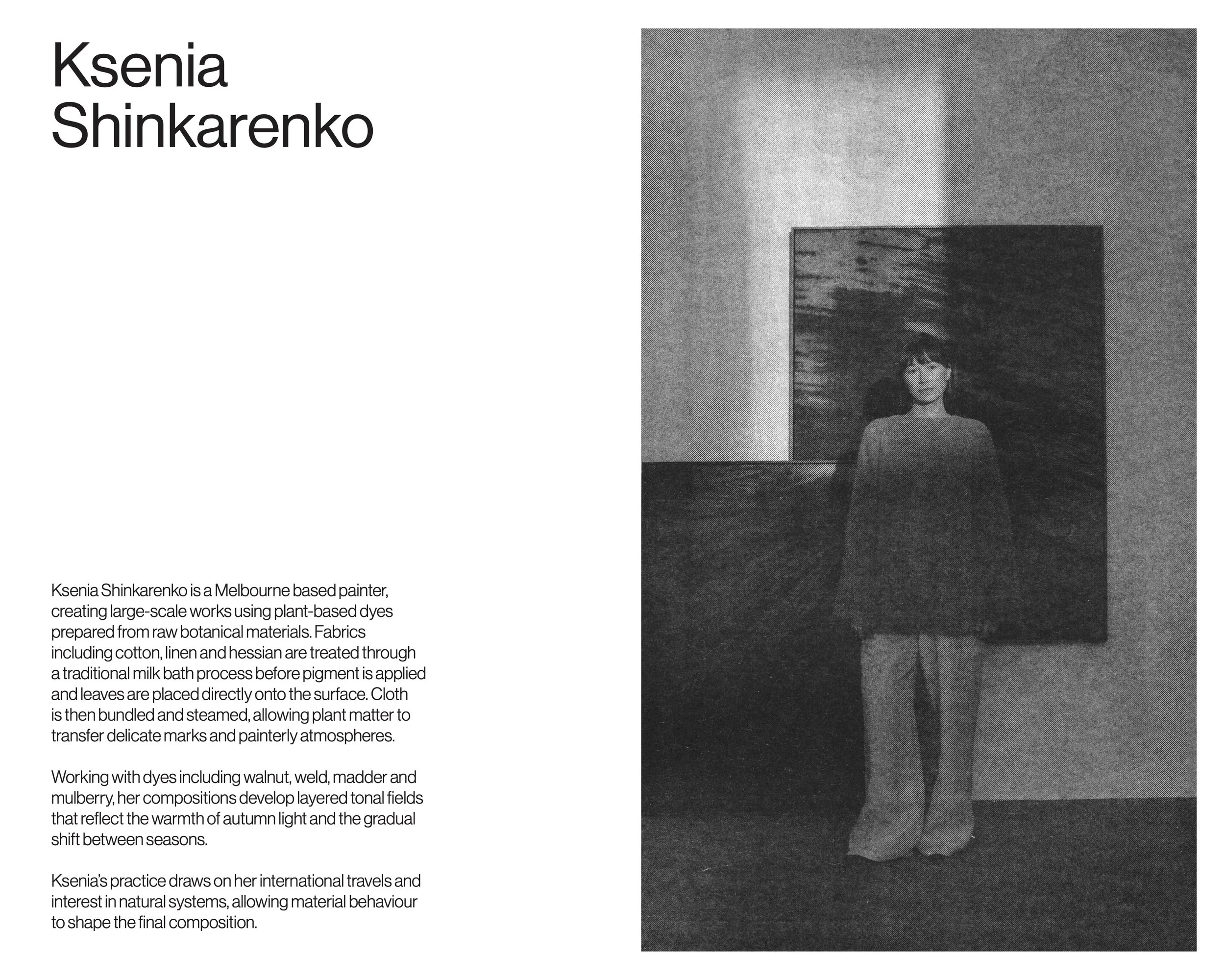
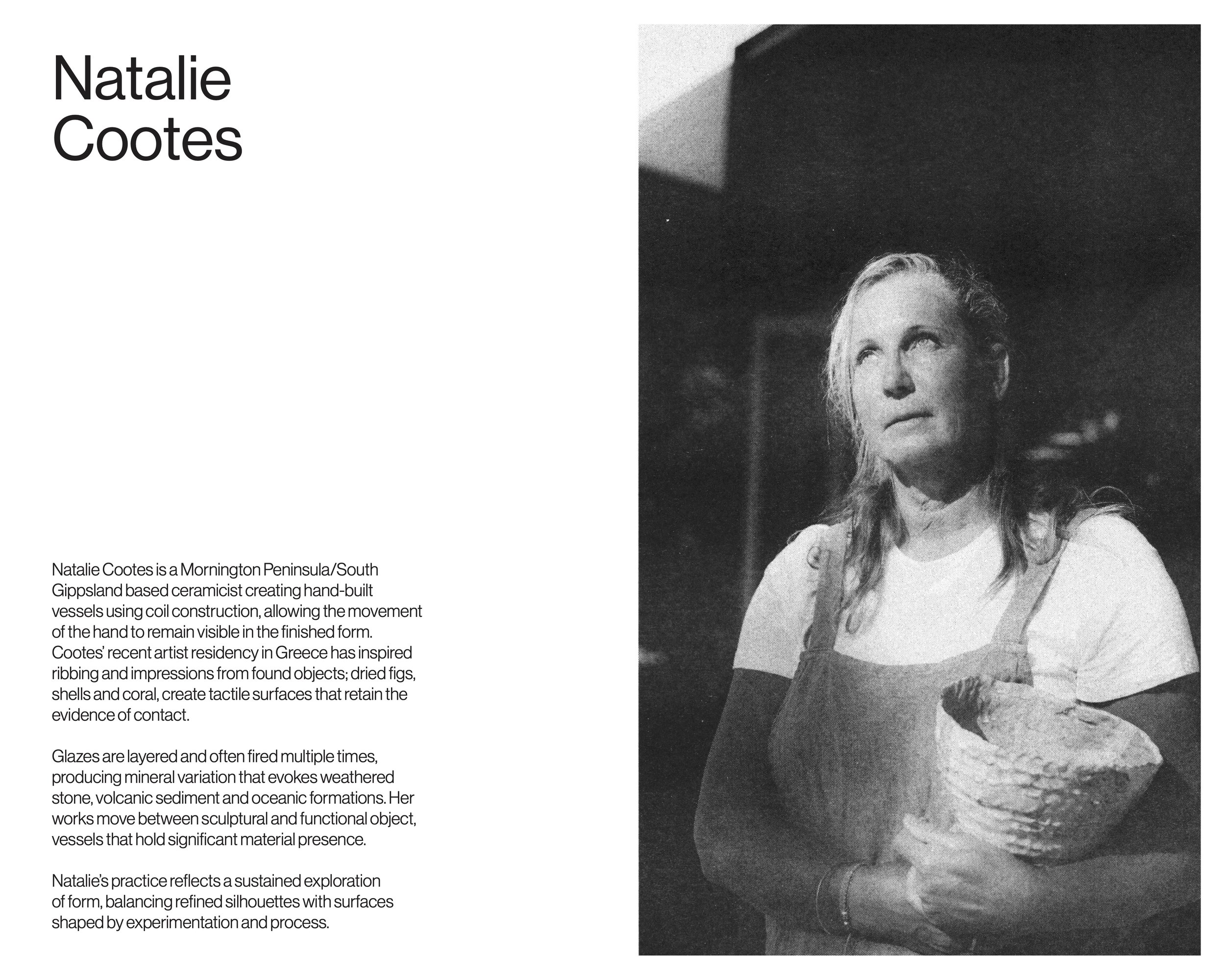
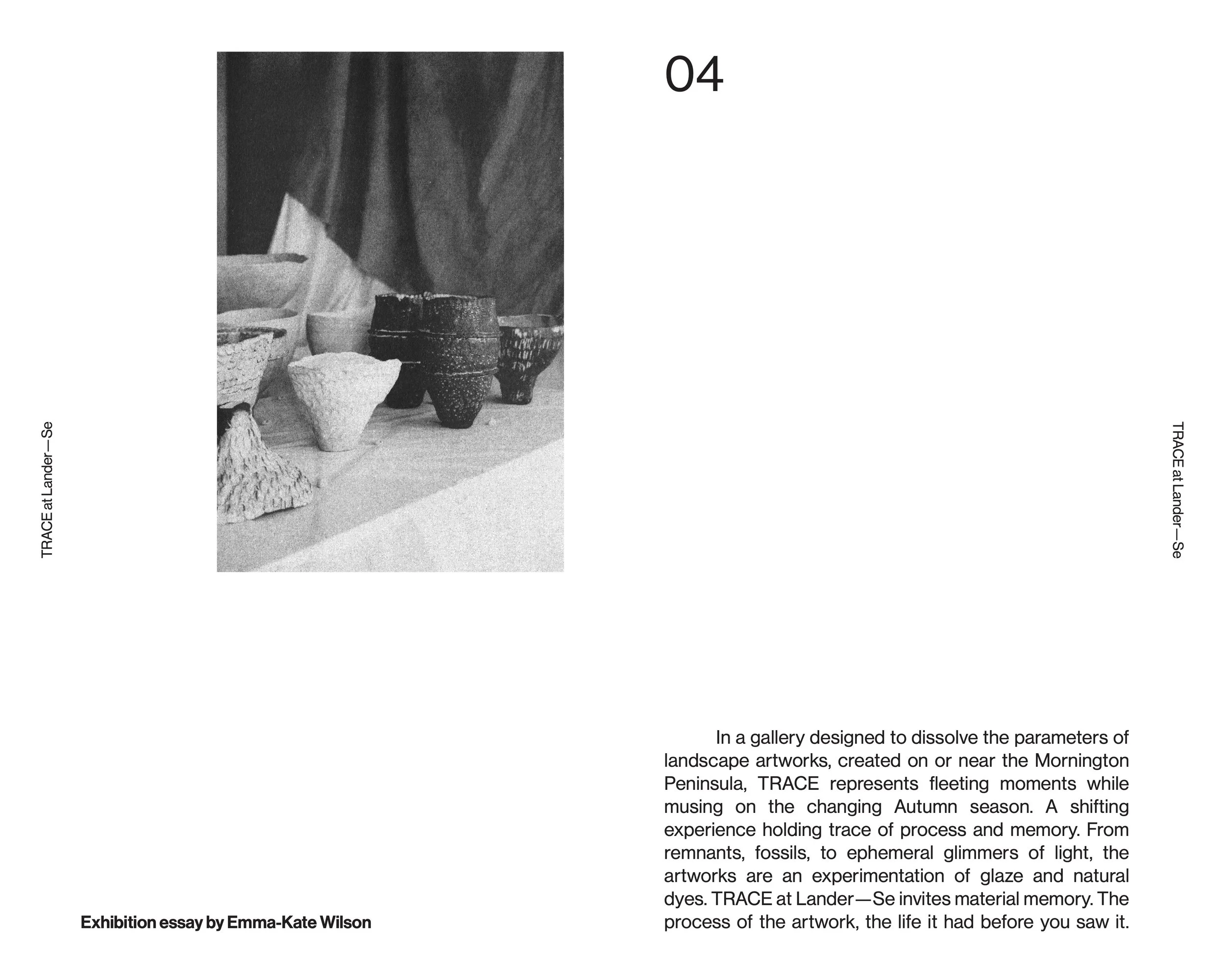
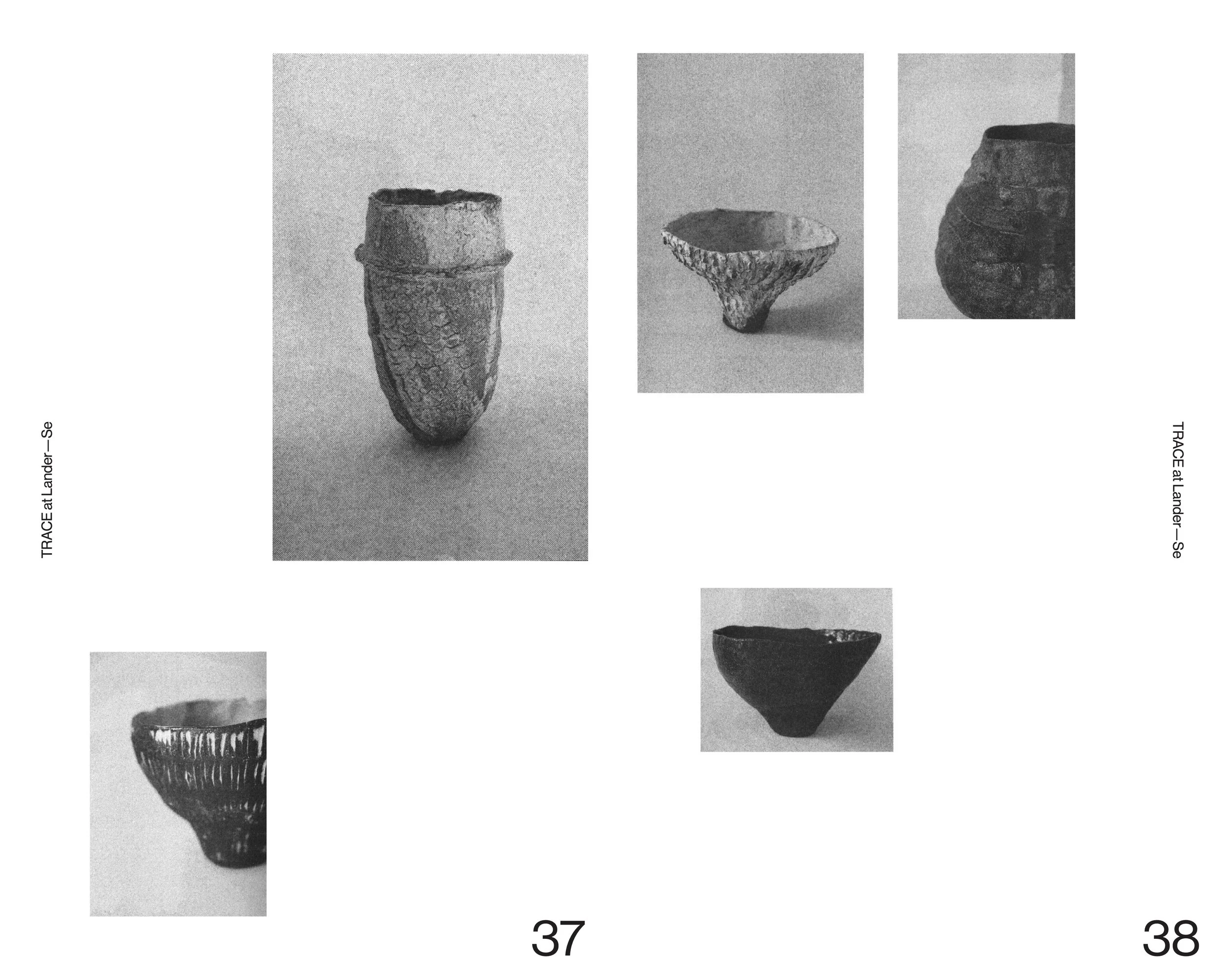
Two artists with very different practices come together in the Red Hill gallery space, surrounded by landscape, Melbourne painter Ksenia Shinkarenko and Mornington Peninsula/South Gippsland ceramicist Natalie Cootes. There is an energetic flow from the artists’ process that radiates within Lander—Se. Humbling and grounding works from the earth; hessian with botanical dye and clay imprinted with objects from the earth. They are drawn from nature, inspired by the organic expression of the landscape. A small vessel or light-filtering textile offers layered assemblages: compositions from found objects, created by gathering and arranging everyday materiality. In TRACE’s case, of objects from nature. Seedpods and shells, or leaves and bark. Where the hand of the maker meets the materials and the tools to form dynamic, constantly shifting, multisensory experiences. It’s here that the materiality anchors the viewer within temporality. One where traces evoke phenomenology, a sense of life, and embodied perception, an experience of life, recaptured within the gallery. A chance to not just walk around the artworks, but to feel, smell, touch, hear. Each experience of the artworks and the exhibition is unique and individual. The way the light hits a certain point in the day, the way the air moves through the gallery. The philosophy of assemblages triggers systems of nature, our methods to engage with art, and continuous transformation. The artworks ask deeper questions about human connection. Perhaps by looking at this small vessel. A pot to hold your flowers. Or a piece of textile, raw, unfinished, with colours that are at the whim of the natural dyes. Is this the temporal human experience? To make, to view, to be reminded of our connection through embodied trace.
Both artists invite daily rituals into their practice and, thus, their art. Cootes’ morning swim in the ocean, and a quiet collecting of nature’s objects, observing her surroundings. Coming back to the ritual of water – active and alive – within an endless colour palette and textures of her nearby reef and the rock formations. For Shinkarenko, mornings begin quietly outdoors, sitting on the ground in the sun and connecting to breath before starting work. From here, her ritual extends into a process of photography and observation. She carries a camera to capture light, texture, atmosphere and patterns while travelling, which feed into the paintings. Closely tied to this are the aspects of slow art where both artists surrender to their process and materiality. In return, the artworks reward extended looking and quiet attention.
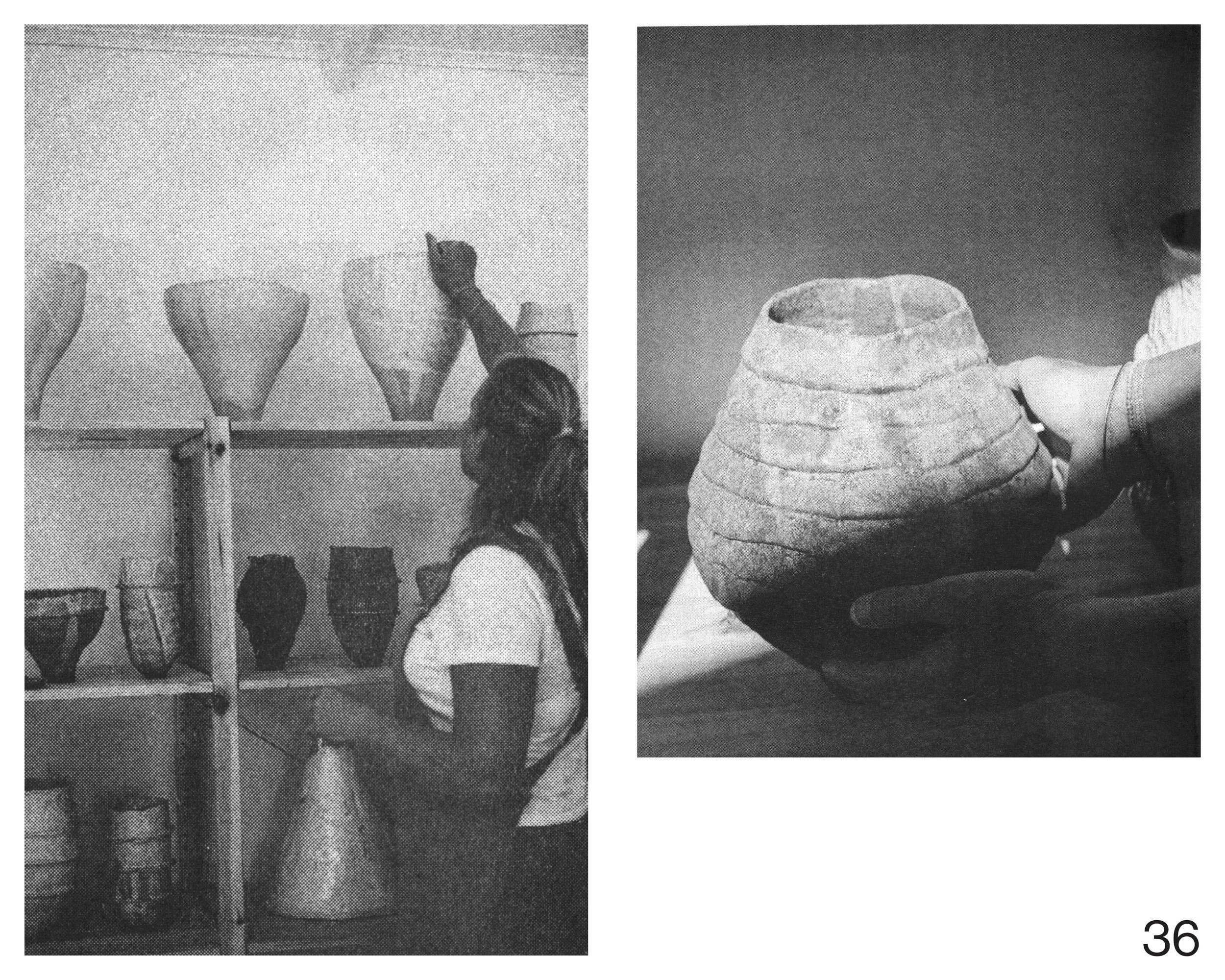
To find tiny explosions in clay from sprinkles of Volcanic rock from Iceland, Cootes’ resonant making vibrates in the viewer long after she’s finished making. Traces of transformation, memories, emotions, deeply influenced by travel. A vessel made in Meteora, Greece, where the land is surrounded by sandstone pillars, sprinkles of Finnish sand, and the impactful first trip to Japan, where art is interwoven within the everyday. Leaving prints as traces throughout the surface: fingerprints, figs, acorns, Papua New Guinea cone shell, volcanic rock, seed pods from sycamore and cypress trees. They are alive and active with memory, representing the ephemeral as a physical object. The titles of Cootes’ ceramics are named by the object’s trace, allowing the viewer to connect with the process.
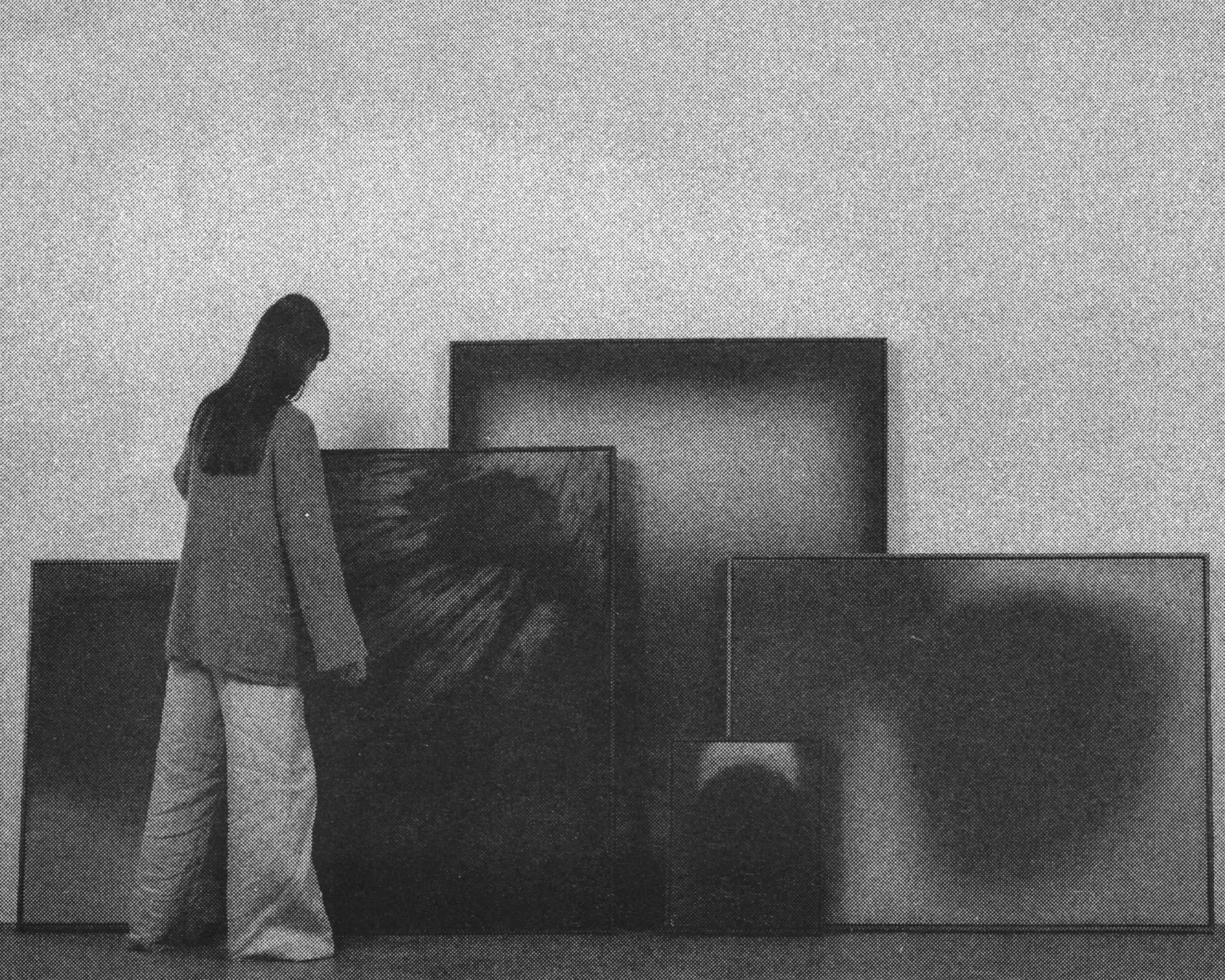
Like with Cootes, Shinkarenko’s atmospheric textile artworks are grounded within biophilic aesthetics. They evoke the imperfect, organic processes of nature; the continuum of slow, conscious making pulls the viewer into the artwork’s aura. Catching light, rays of sunlight cast beams of illuminated colour. Capturing the unpredictable experience of immersion in the natural landscape. Using natural dyes on textiles, Shinkarenko creates pigments made from dried leaves and barks. But the process of rehydrating them creates unexpected patterns and colours that continue to shift as they hit the fabric, in a process lightly inspired by the Japanese technique Hikizome. It’s here that a blurring of colours imprints traces into the textiles, before they are steamed and set. The final artworks are the result of experiment and unpredictability —like the explosions in Cootes’ works— immersed in memory to capture a moment in time, eliciting the natural flow and transition between seasons and sparkles and ripples in light.
Inspired by nature, TRACE offers an immersive, sensory experience. A memory of moments. The two different mediums generate an energetic conversation that lasts far longer than the process of making or viewing. The artists are connected through the idea of the meditative object—to slow time, to look, observe, be in a sensory immersion within tactility and materiality. Like how the theory of the phenomenology of materials continues the themes of Cootes and Shinkarenko’s knowledge and meaning inspired by nature; a bodily, sensory engagement with their process is shared by the viewer in experiencing the works. Both practices foreground the tactile, the textured, and the slow accumulation of surface as a mode of meaning. A closed sculptural form filled with stones, a shake, to rattle, a chance to muse on the sounds of nature. Or the way the light streams through the translucent textiles, hand dyed, casting multicoloured, soft gradient, subtle glows on everything in the sunlight’s path.