
VEIL
October 31 — November 22, 2026
Solo Exhibition by Leyla Bulmer
At Lander–Se, 585 Dunns Creek Road, Red Hill, Victoria 3937
Essay by Emma-Kate Wilson, Photography by Bri Horne
Swimming through sea, floating immersed in sky.
Held like mirrors to atmosphere — ever-changing, yet still;
Puddles of ink pool across raw canvas.
Framed in solid timber, rooted in the natural world;
Some edged in blue, a continuous horizon where one artwork dissolves into another.
Others in lace, delicate as a bride's veil;
Like the ancient kings of Ireland, who married the land — a woman, a bride, a country made flesh.
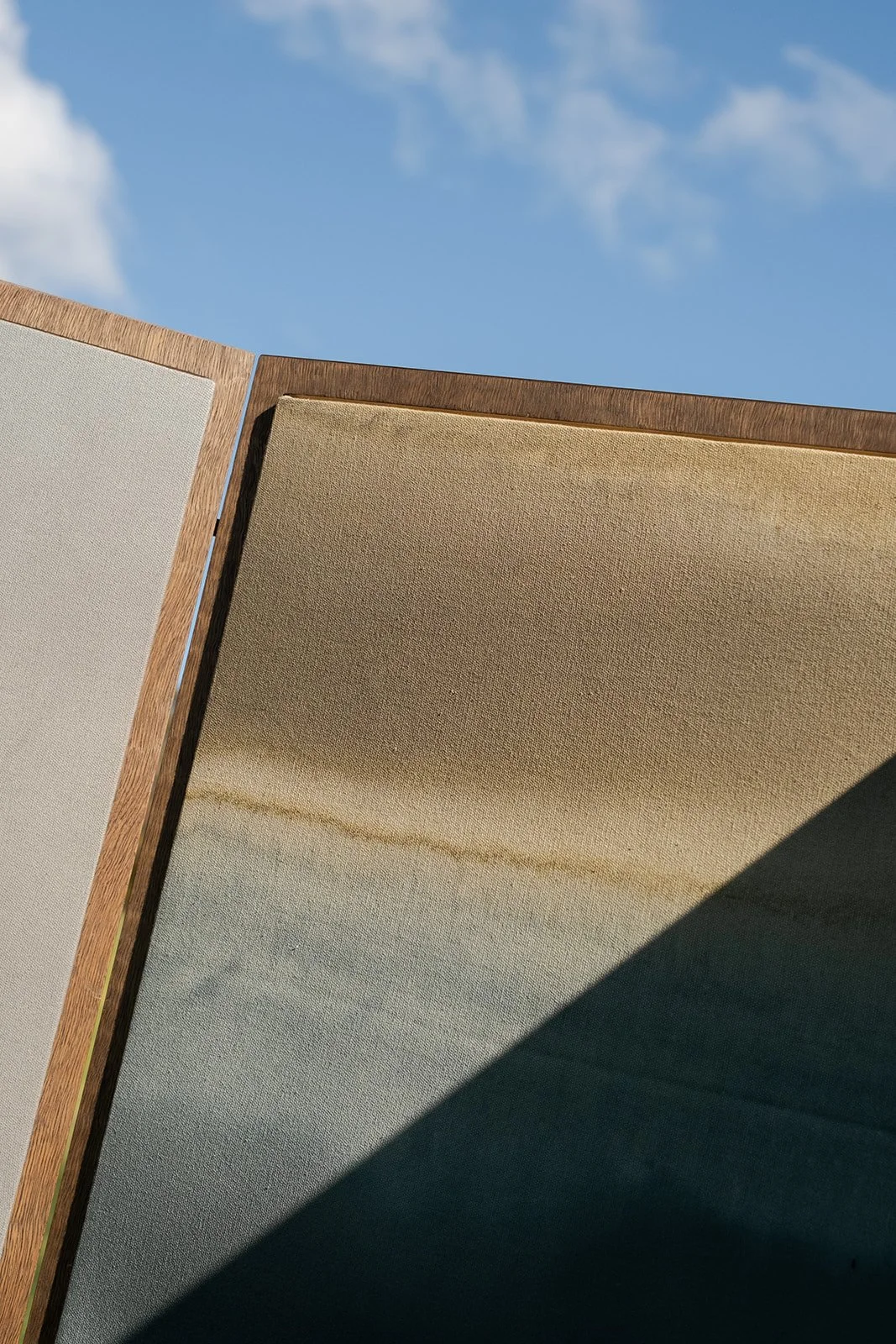
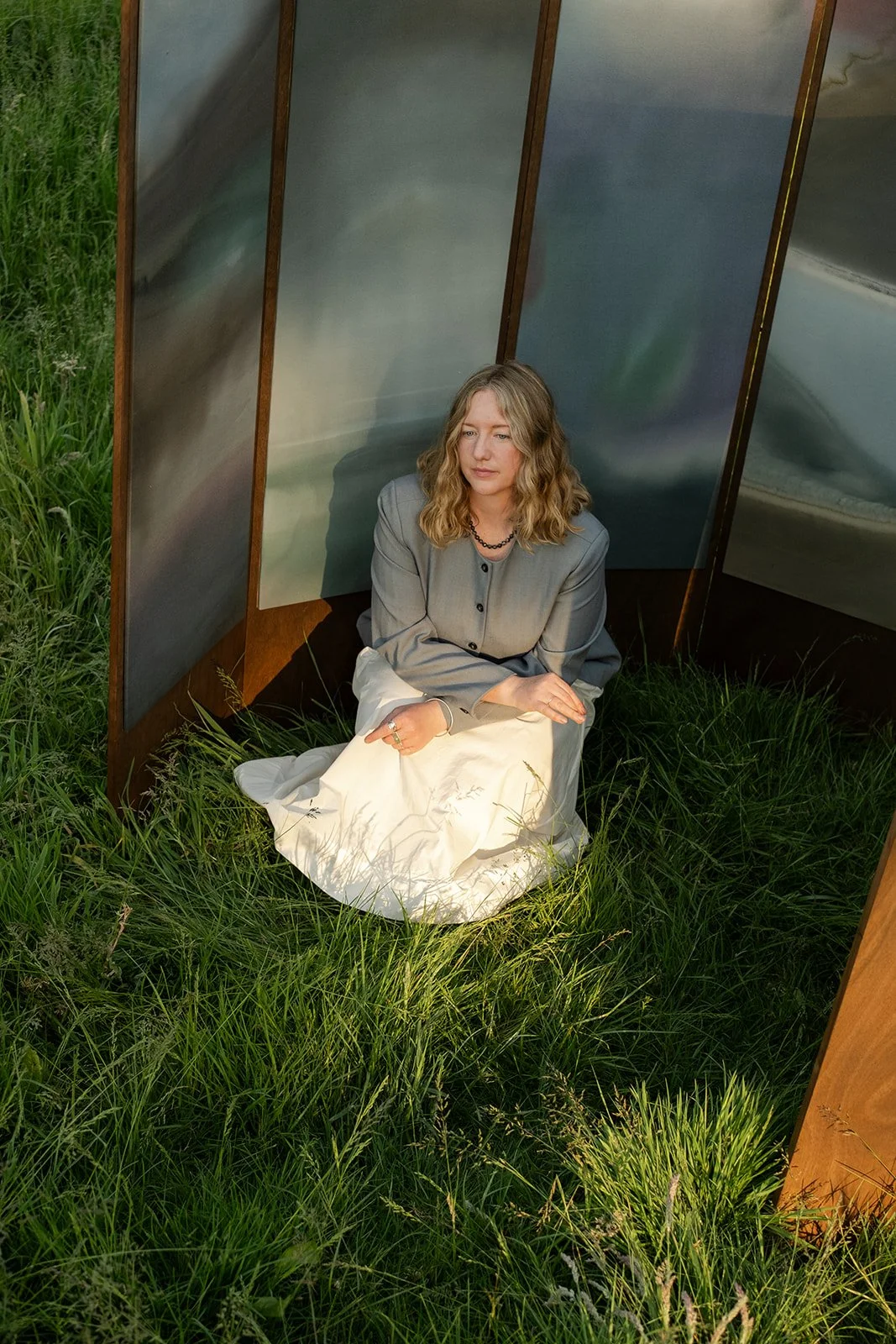
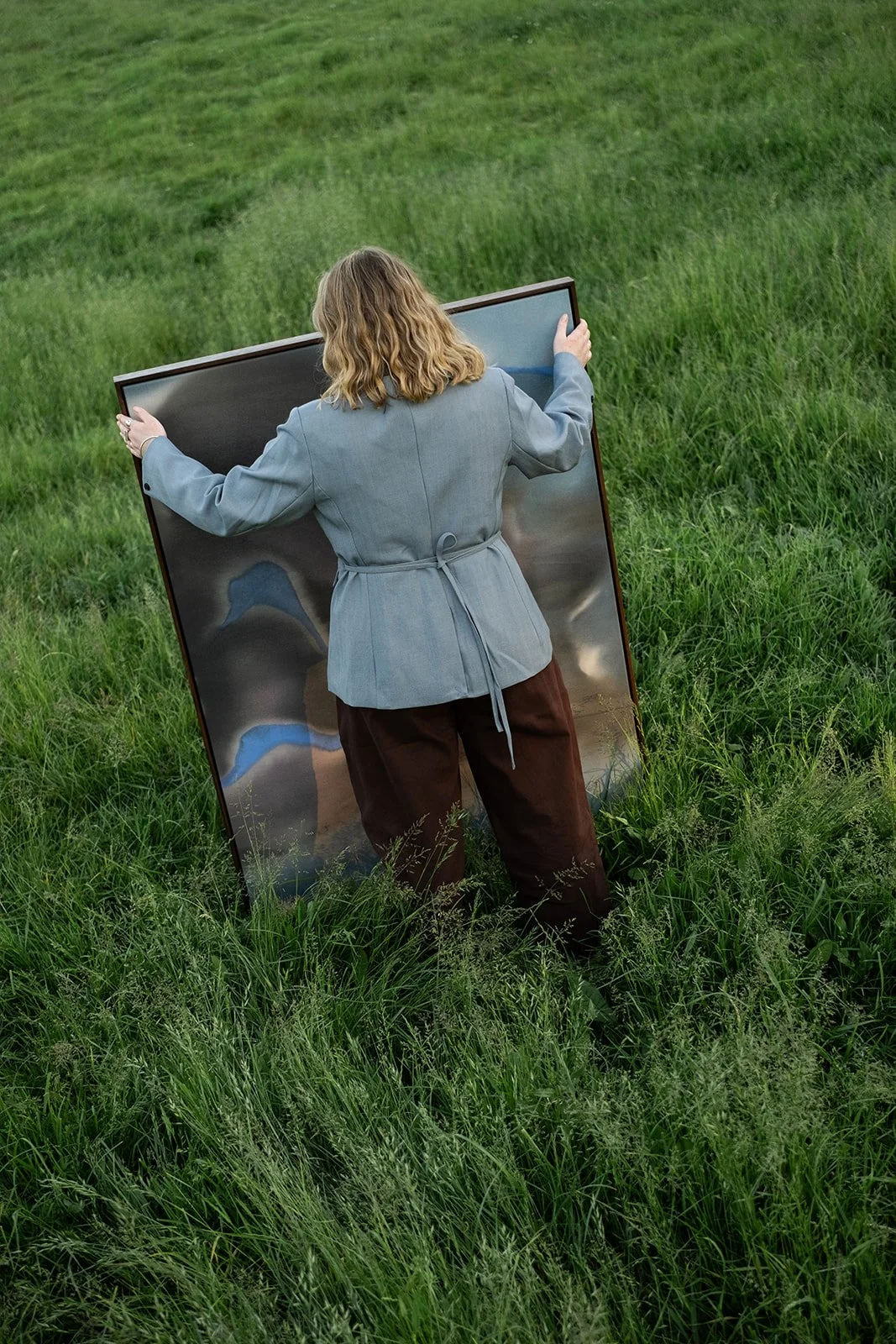
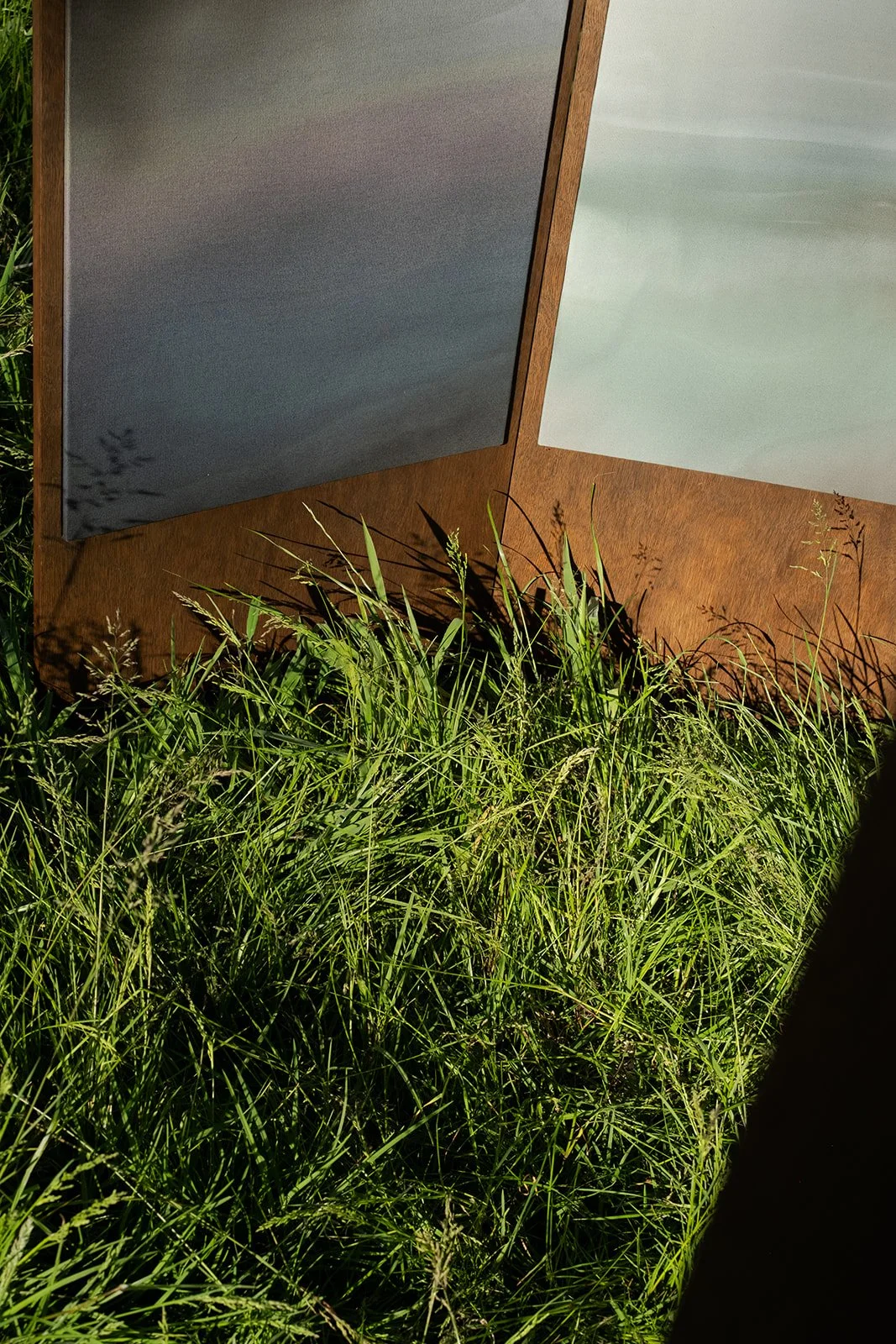
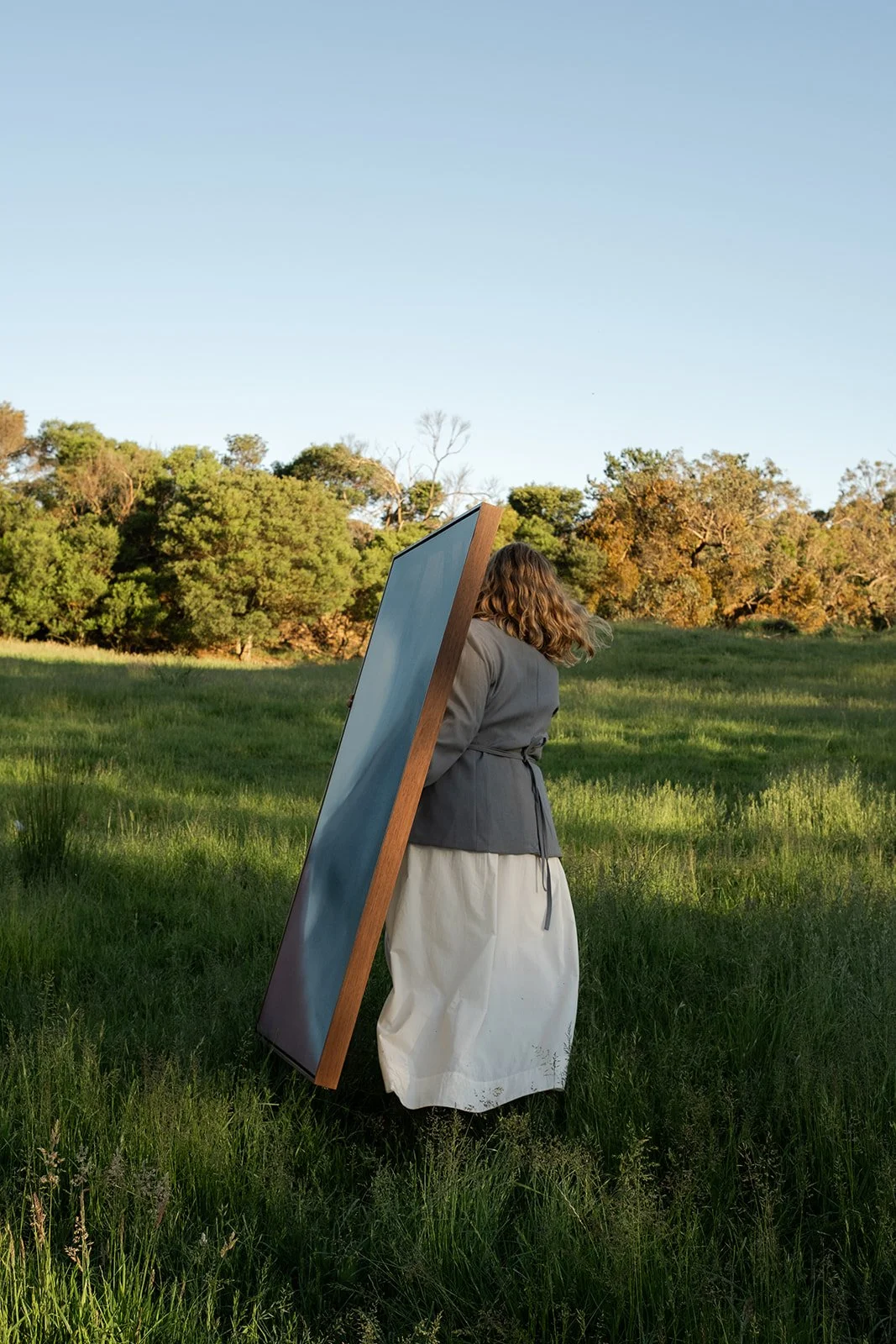
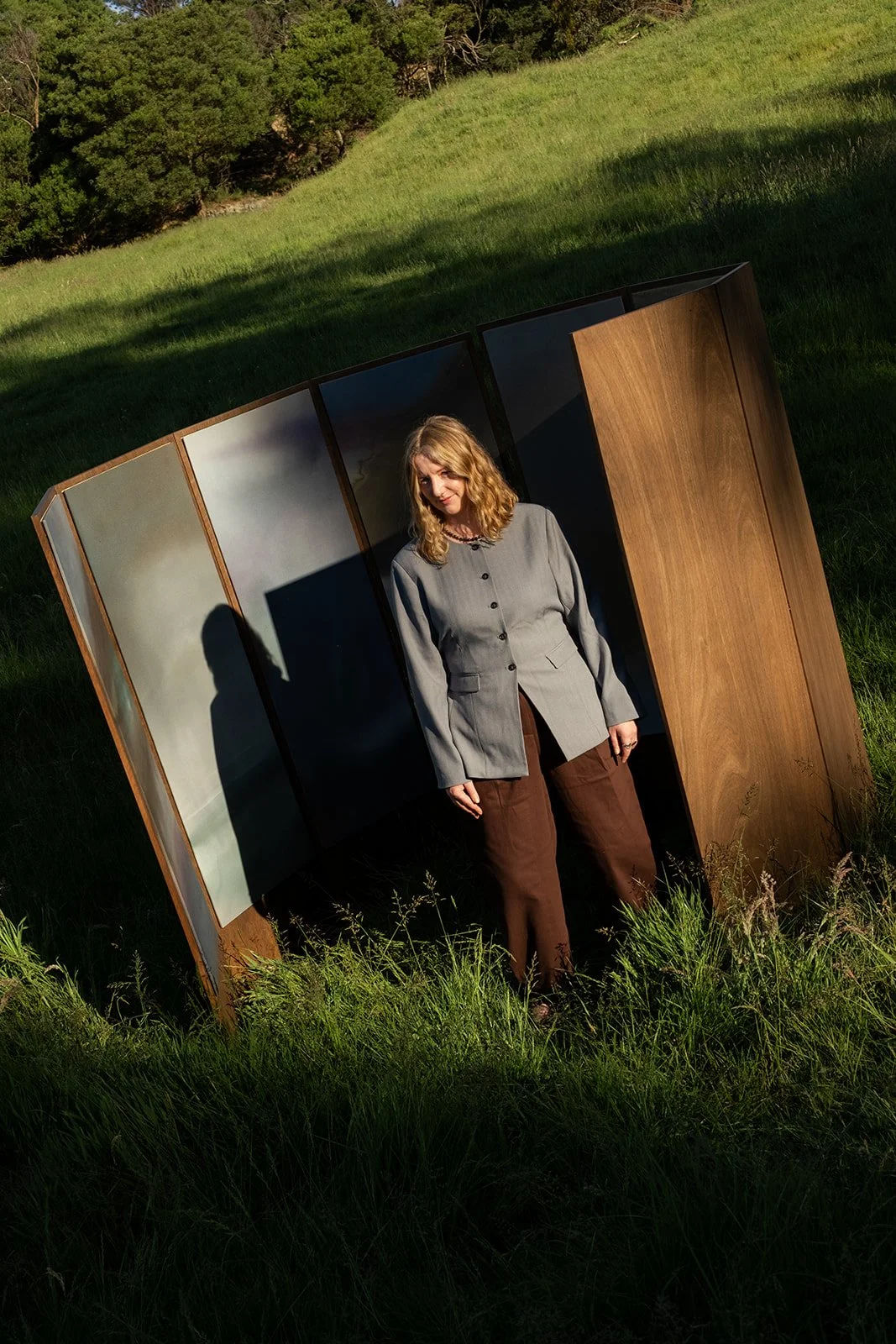
Based on Boon Wurrung and Bunurong Country on the Mornington Peninsula, Leyla Bulmers’ new body of work, VEIL, marks a shift from portraits of the human body towards abstract ink paintings shaped by meditation, experimentation, and an openness to letting go of control. Working with ink on canvas, she pours and layers paint in bold, fluid movements, letting the materials soak, merge, and find their own direction. The resulting works are imagined landscapes held within the body: atmospheric representations of inner worlds in which dissolving outlines and overlapping layers challenge certainty and make space for the unseen. While the process has changed, the underlying intention remains much the same. Where her earlier portraits explored belonging through the stories held within the body, the new paintings continue this enquiry through a more abstract, embodied language.
VEIL draws on Bulmers’ memories of Ireland, her life in Australia, and an ongoing search for a sense of home between two places. On a trip back to Ireland after living in Australia for over 10 years, she found a renewed engagement with Irish literature, music, and mythology. She re-experienced the concept of the veil —the threshold between the known and unknown— and how it can be experienced and explored through the Sidhe, who in Irish mythology live beyond the veil of this visible world. ‘Sideways to the sun’ is the space through the veil where they live. Like dawn and dusk, where night and day blur. As Bulmer reckons with her yearning for her culture and country, the Celtic word cumha captures this sense. Unlike any word in English, it evokes the heavy ache for what’s lost —a person, a place, or time— a steady, enduring emotional pull. VEIL is a musing on being in between two places.
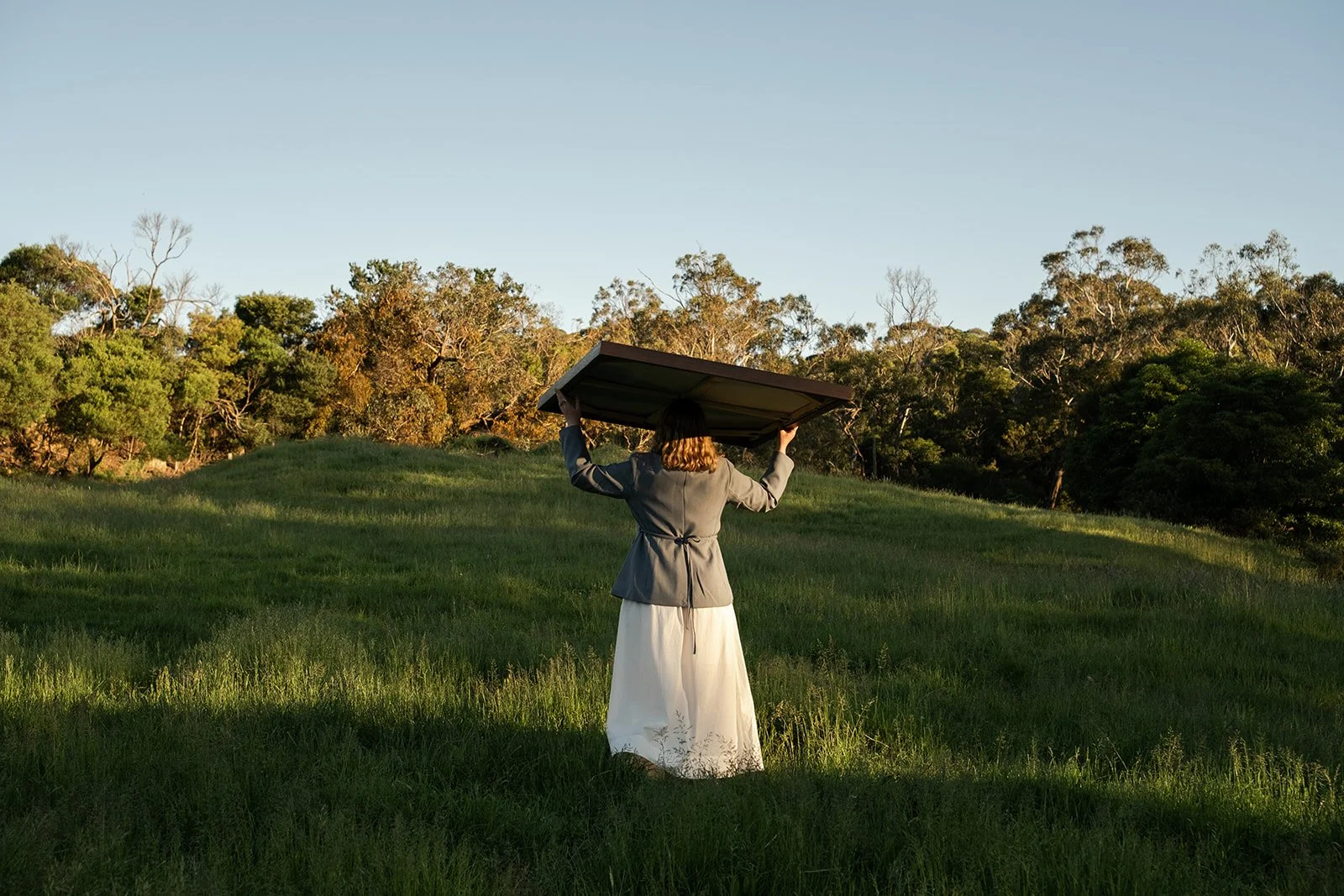
In his poem, The Lake Isle of Innisfree, Irish poet W. B. Yeats writes:
“Dropping from the veils of the morning to where the cricket sings;
There midnight’s all a glimmer, and noon a purple glow,
And evening full of the linnet’s wings.”
Yeats’ deep yearning for peace, solitude, and escape from the noise of London to a quiet, natural sanctuary in County Sligo, Ireland (where Bulmer’s roots are) evokes this form of portal, where the mind can be between places while the body remains fixed. In this sense, VEIL, especially shown at the rural gallery Lander—Se, offers a way to experience the in-between. It's as if Bulmer enters the veil every time she makes the works; a portal to the space, sideways to the sun. The paintings represent where sky, sea, and land become difficult to distinguish, creating landscapes that are as much emotional and remembered as they are physical. Ink creates tide lines across the canvas, echoing the veils of fog where sky meets misty seas. They reflect the process — the result of letting go and surrender. Where the medium creates its own sense of time. A trust in the ink as it’s applied ‘wet on wet’ in one blending, merging moment. In the drying process, the work she returns to is usually entirely different. If the work doesn't evolve as planned, Bulmer rolls out fresh canvas and starts again. It's not a medium that can be heavily reworked outside of the initial moment. There is a pull to keep re-entering this portal of creation over and over, and, finally, developing a practice of accepting what is.
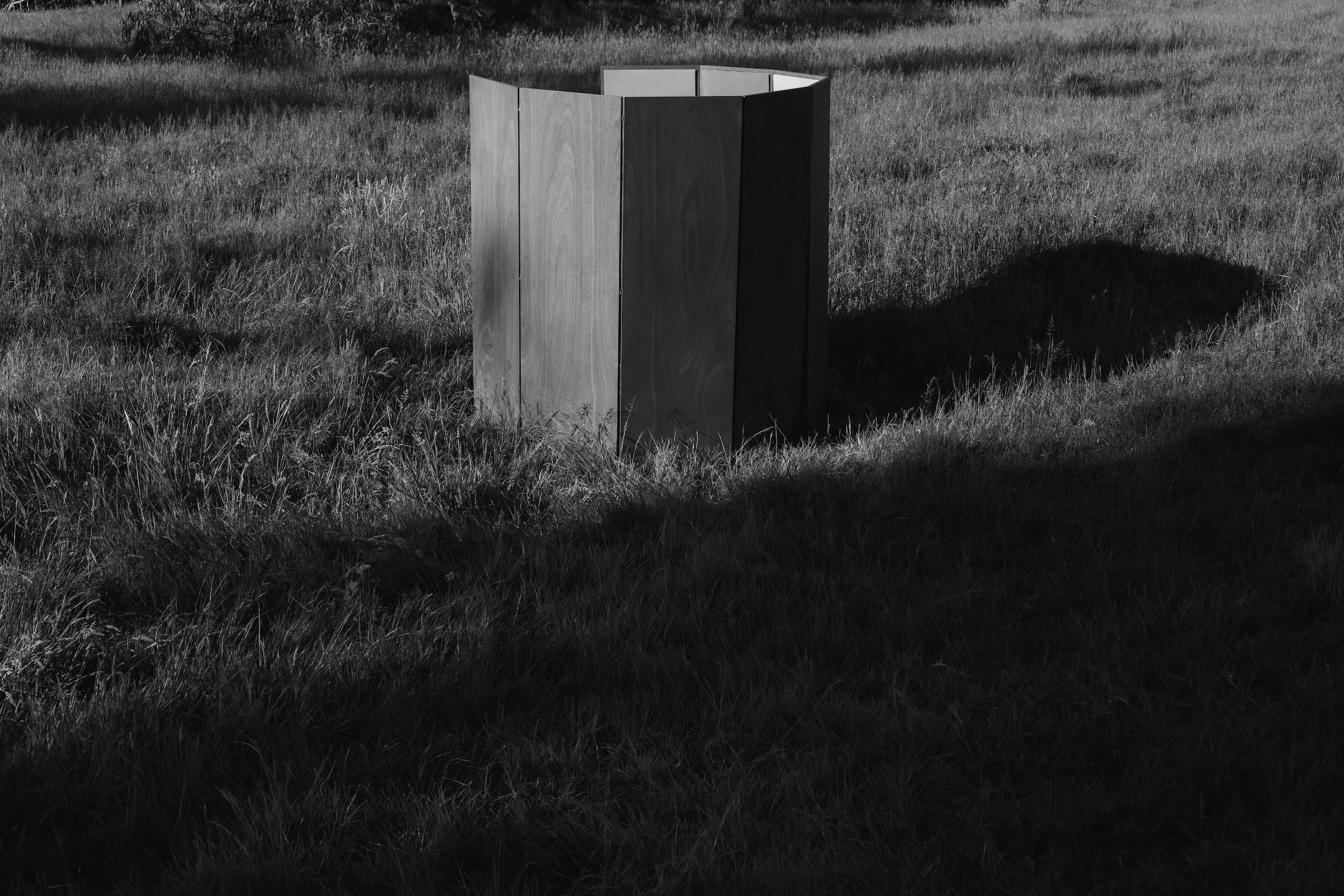
The exhibition extends these ideas into the gallery through an installation of room dividers arranged in a circle, evoking an ancient stone circle and a portal between worlds. Just like Bulmer’s ink painting process as a ceremonial act. The paintings hold something of this suspended state, their shifting blues reflecting an atmosphere that is never quite still. Ink pools across raw canvas, gathering like water across a landscape, while timber frames give the works a sense of material grounding, or blue frames turn the artworks into three-dimensional sculptures. Elsewhere, lace softens the edges, its delicate presence recalling the translucency of a bridal veil. There is something more than decorative in this gesture. In ancient Ireland, the king's marriage to the land was a symbolic union with the sovereignty goddess: the country imagined as a woman, a bride, a living body. Here, lace opens a similar territory of association, bringing landscape, femininity, and belonging into a more intimate relationship. Together, the paintings and installation invite a consideration of belonging that reaches beyond the human, opening towards the more-than-human world and the unseen connections between people, place, and nature.
The exhibition opened on 31 October 2026; on this day, the veil is at its thinnest, for Samhain, the old Celtic new year. This slippage between these veils, the feeling of being between worlds, acknowledges that Irish culture has an understanding that there are other worlds, realms, other possibilities and realities. As Bulmer muses, the artworks allow for a delving into ideas of how your life could exist in another place, or maybe it already does.